
Transforming the global health architecture to prepare for future pandemic threats
Client
Services
Creative direction
Digital / Web
Editorial report series
Information and data design
Social media
Strategy
UX / UI
Deliverables
Data visualization
Digital interaction
Editorial report design
Executive summary in six UN languages
Icon illustrations
Information organization
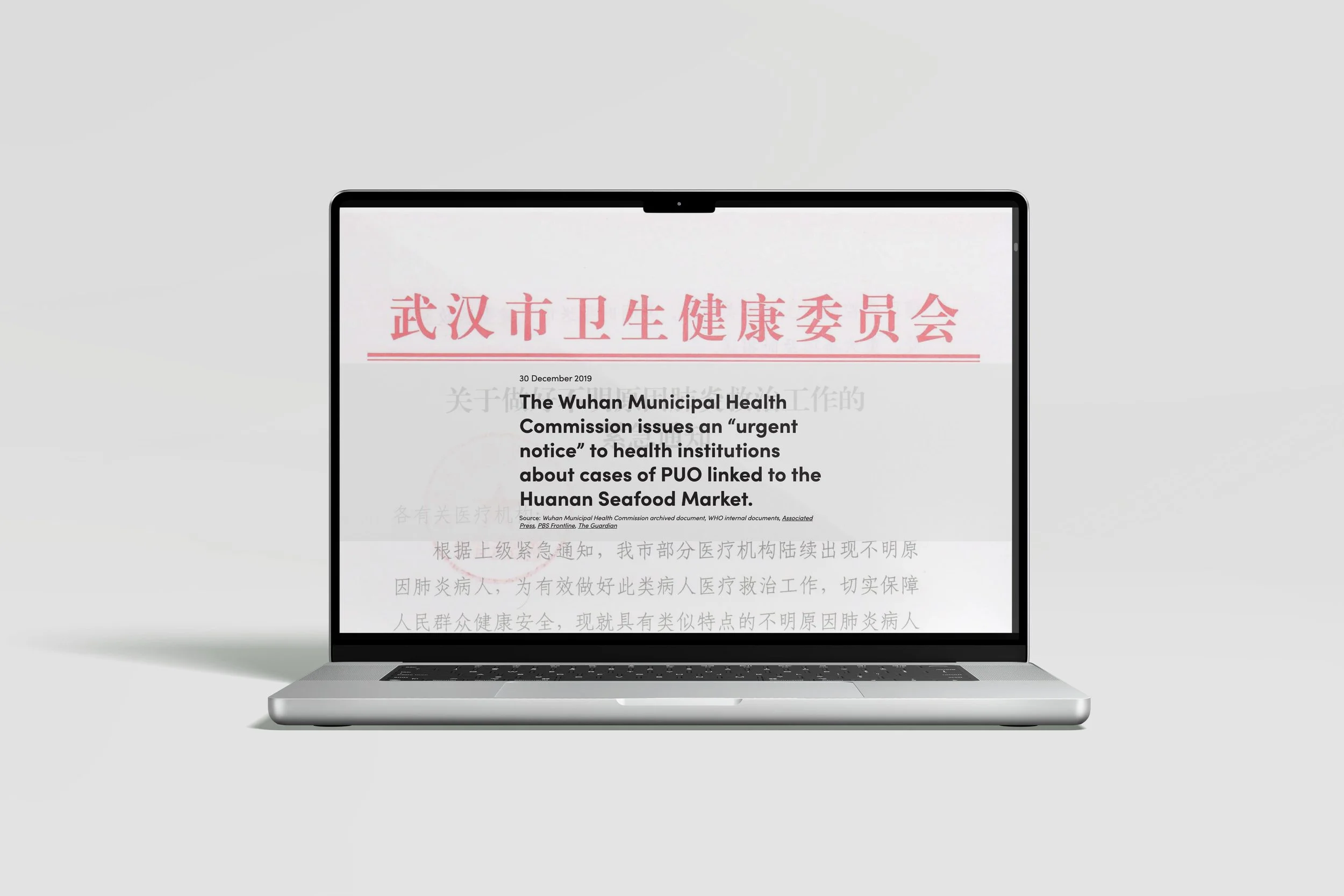
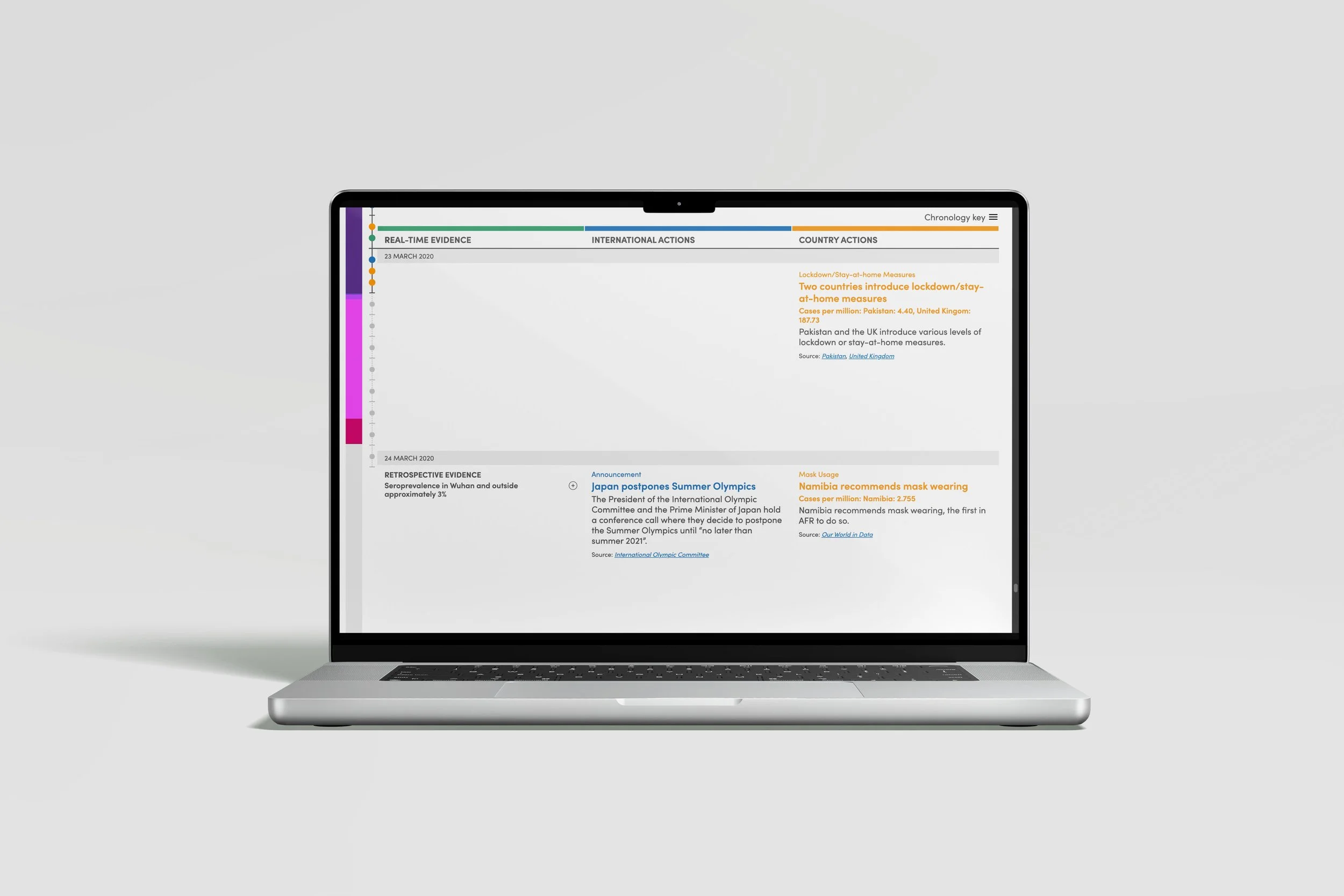
Interactive chronology
Recommendations framework infographic
The Lancet peer-reviewed chronology
Social media templates
Website design
UX / UI
Credits
Taylor Blake, Cartographer + GIS Specialist
Janet McLeod Wortel, Icon illustrator
Production design team:
Kelly Kingdon RGD
James Kuo RGD
Janet McLeod Wortel
Andrew Reutsky
The project
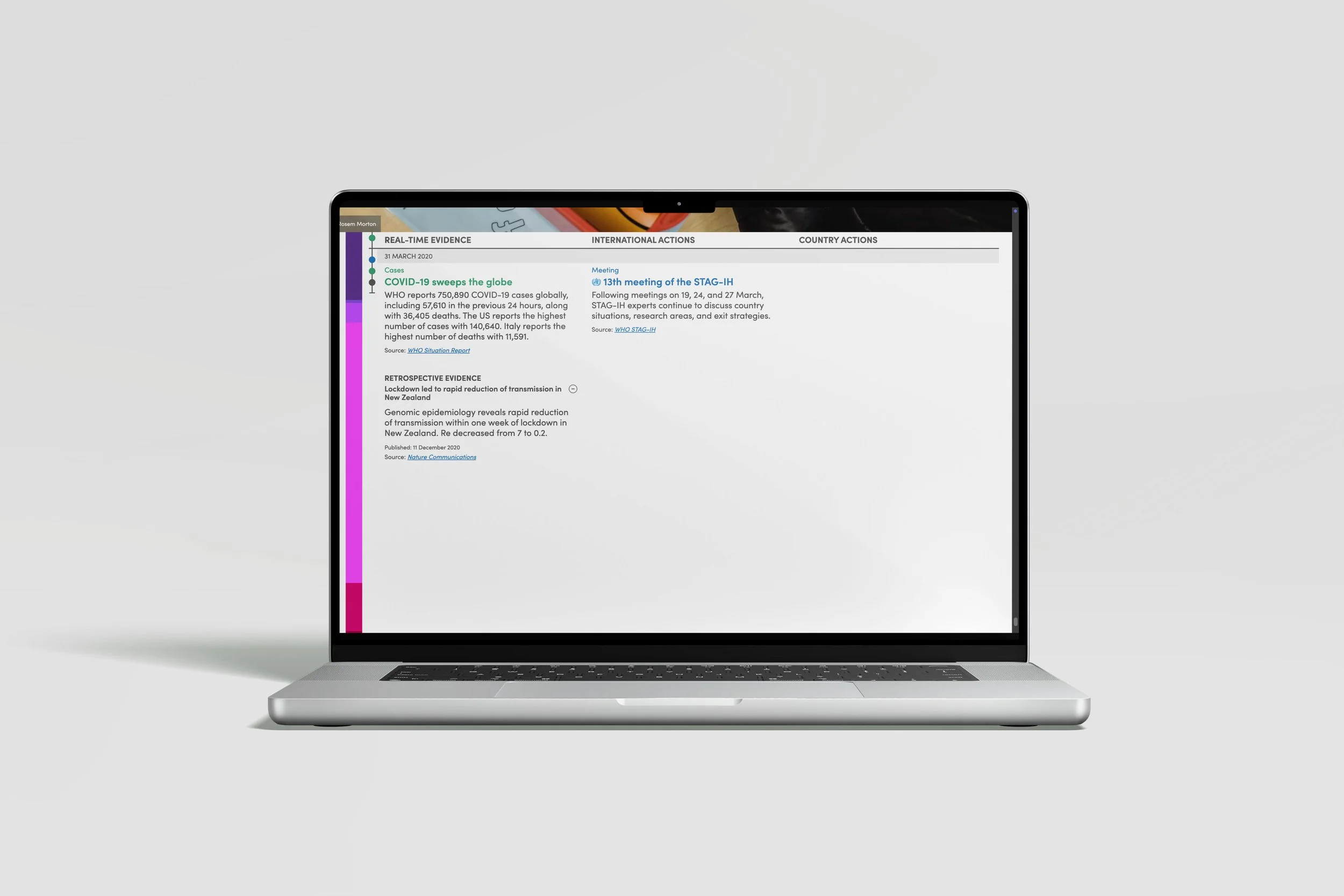
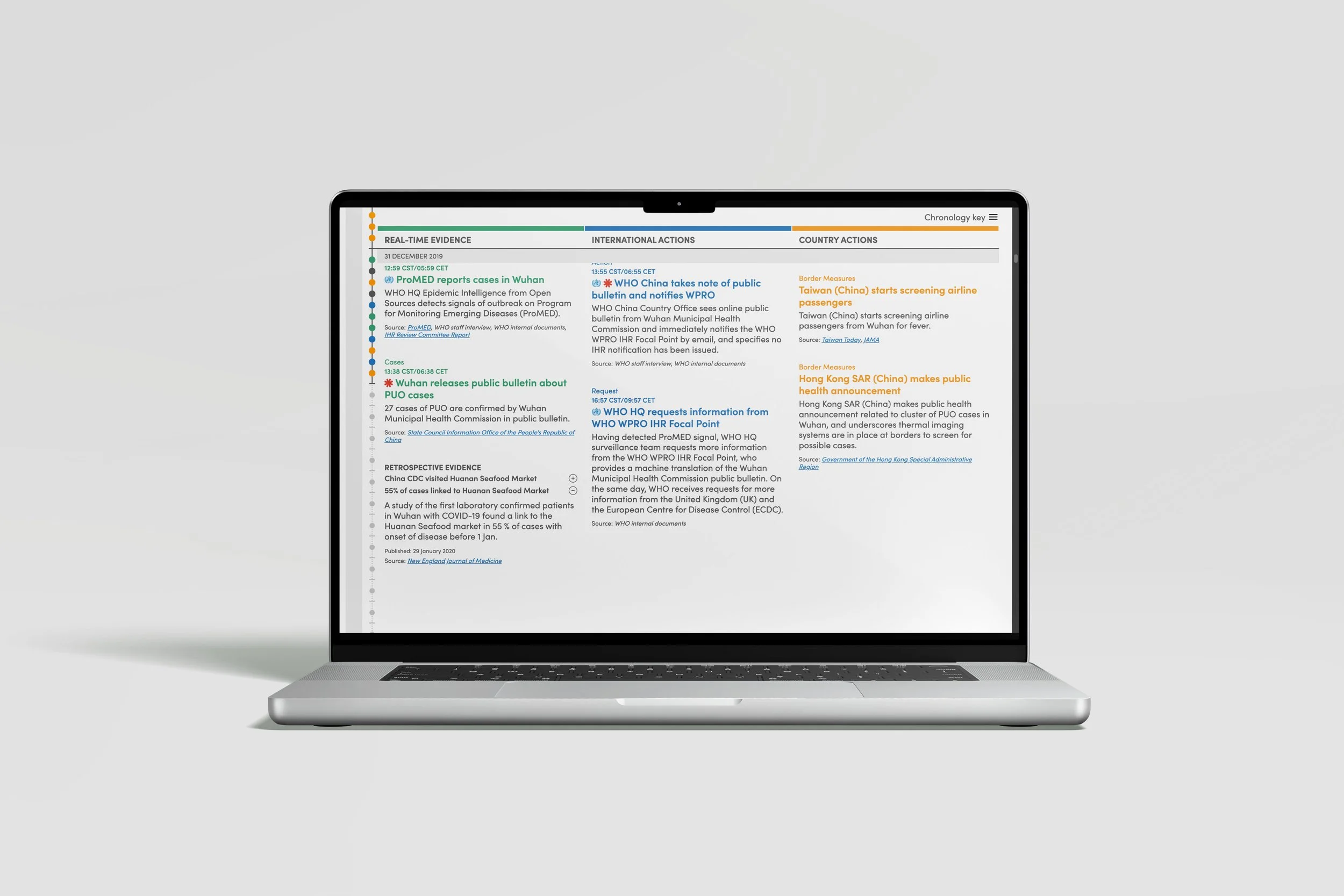
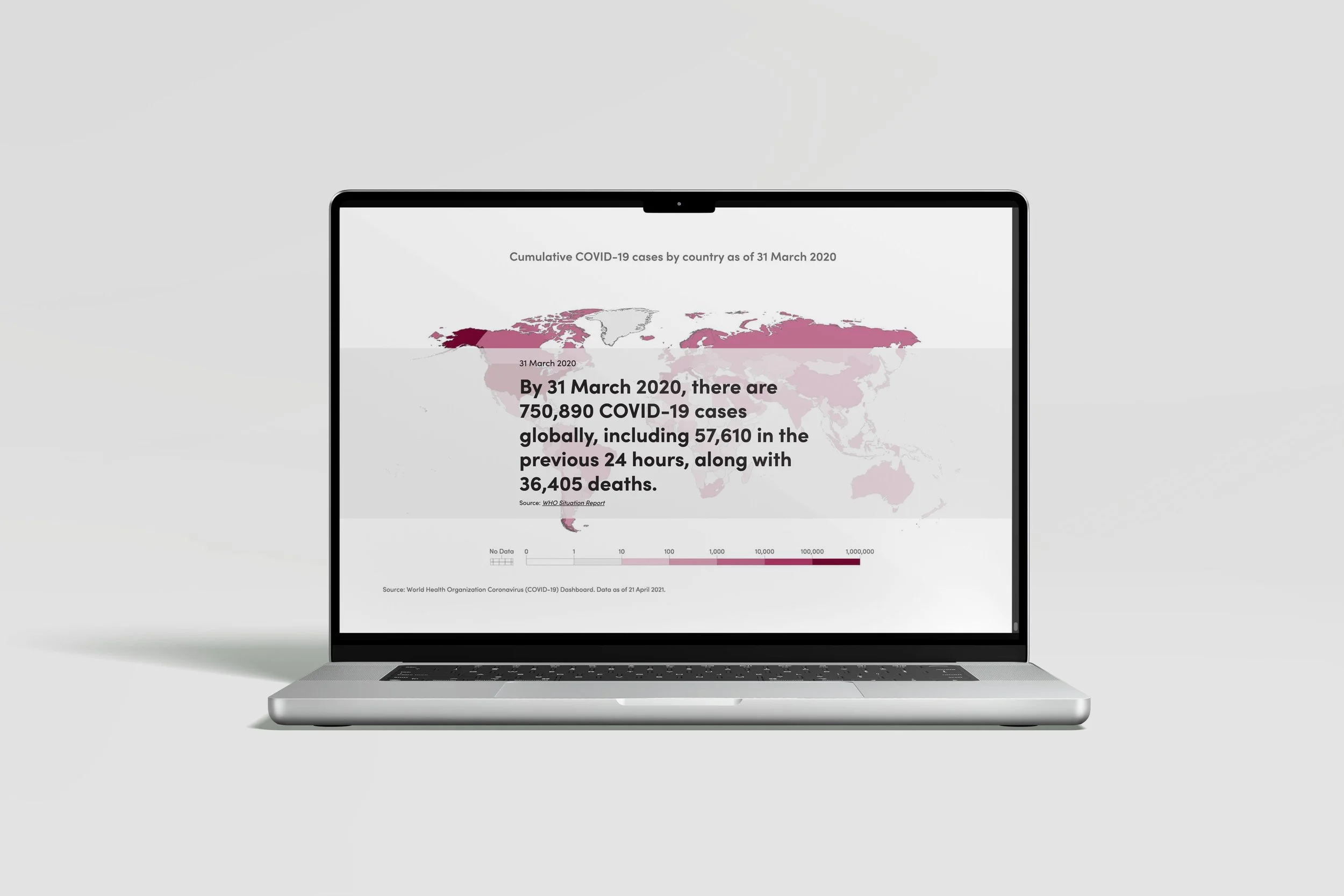
The Panel’s objective was to communicate the complexity of the COVID-19 pandemic evolution through an authoritative chronology. Our solution needed to show the spread of SARS-CoV-2 and actions taken locally, nationally and globally. It needed to be 100% accurate and evidence-based; contain real-time and retrospective information that was legible and compelling to a range of audiences, including global health policy specialists, academics and mainstream journalists.
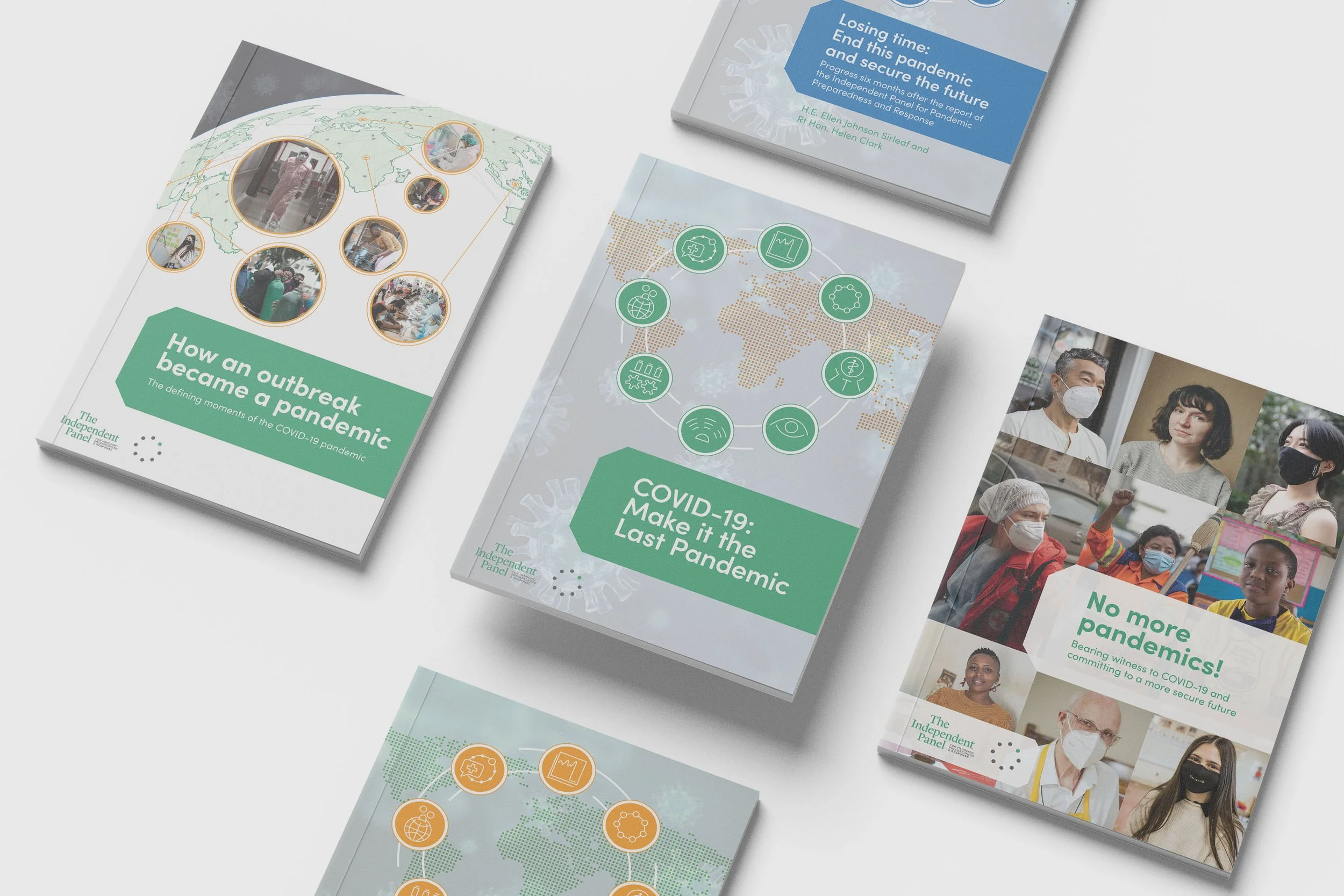
Hopgood Creative was responsible for two outputs of the chronology: an easily referenced PDF document and an interactive public-facing website. Following its production, the PDF chronology was published as a part of a background paper in the peer-reviewed and highly-acclaimed journal The Lancet, which was an accompaniment to their main report: COVID-19: Make it the Last Pandemic.
How do you communicate urgent health recommendations at a local, national, and global level? This was the challenge of The Panel’s report that covered events from late 2019 to the end of 2020. The task was large and highly-anticipated by the global community.
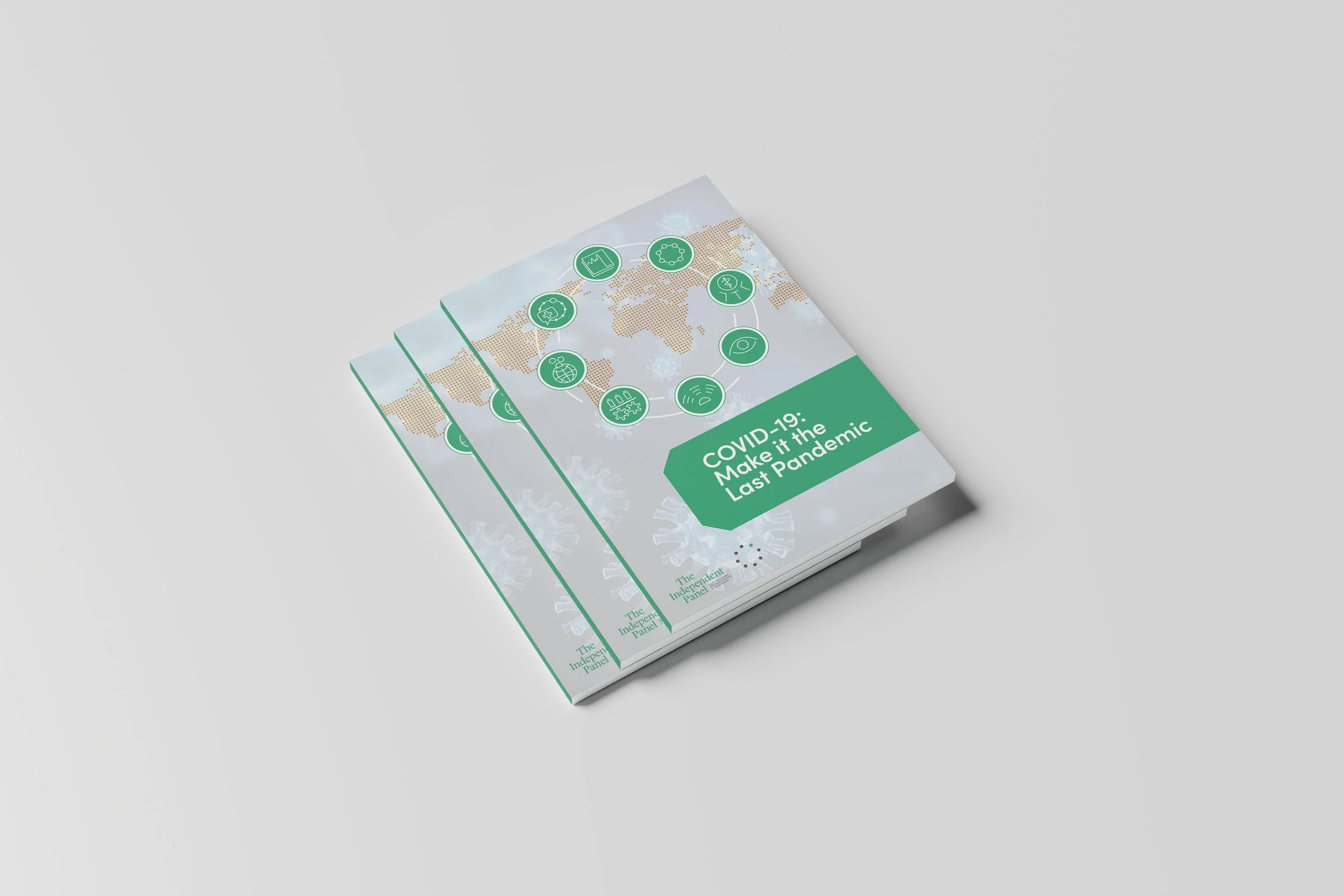
The main task was to design a publication with accompanying supplementary reports and social media assets for The Panel. We designed a framework for The Panel’s recommendations so that it lives separately from the report, making it more accessible to political leaders, policy makers, public health specialists, academics, the media and the interested public.
Our final solution balanced the importance of research and analysis with engagement and approachability. The Panel believed our final design accurately portrayed the mission and seriousness of the report’s content.
The report, its findings, and its recommendations were presented at a global launch on May 12, 2021 to the World Health Assembly and the world at large.
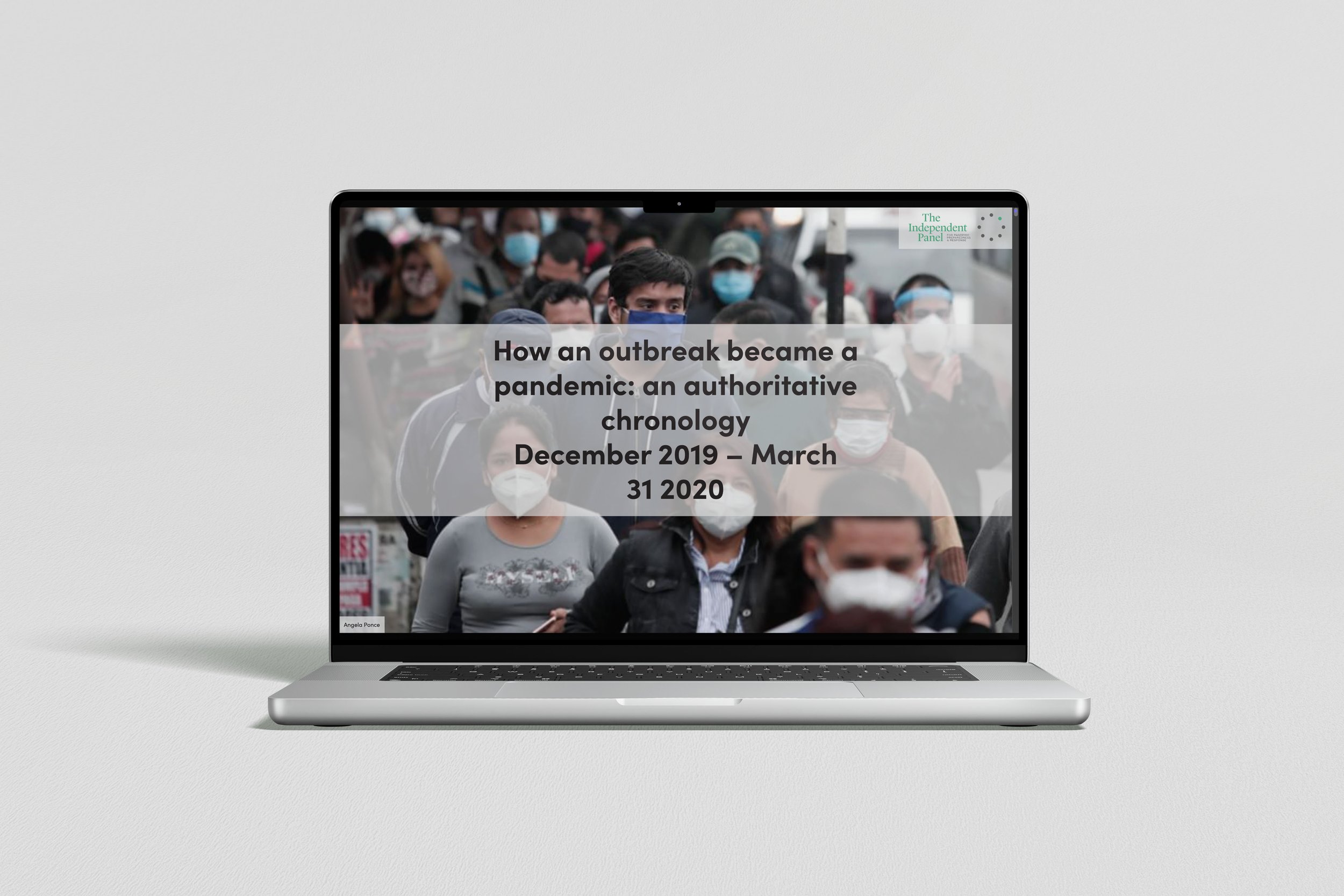
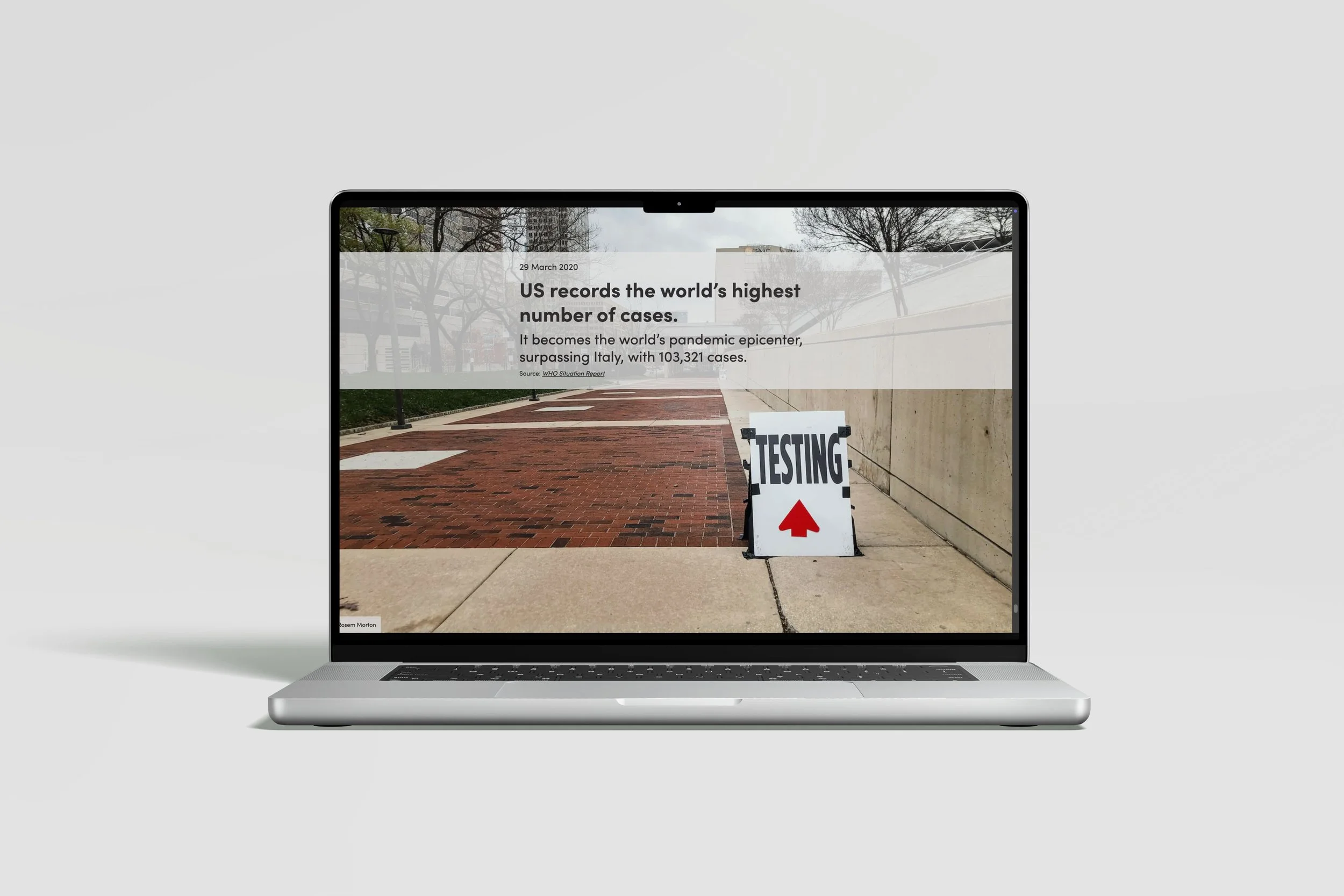
Interactive chronology
The Panel’s Recommendations Framework
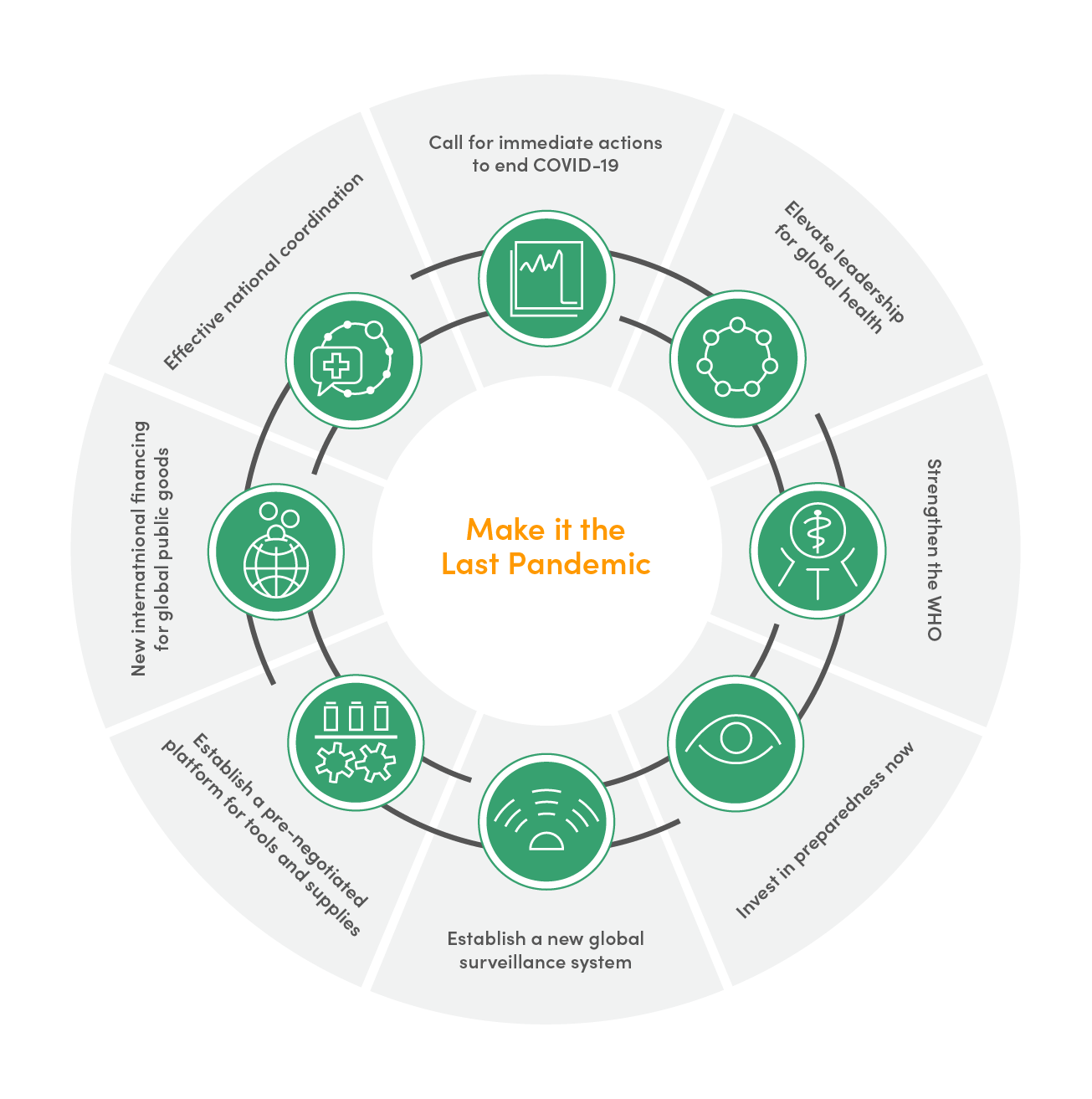
COVID-19: Make it the Last Pandemic
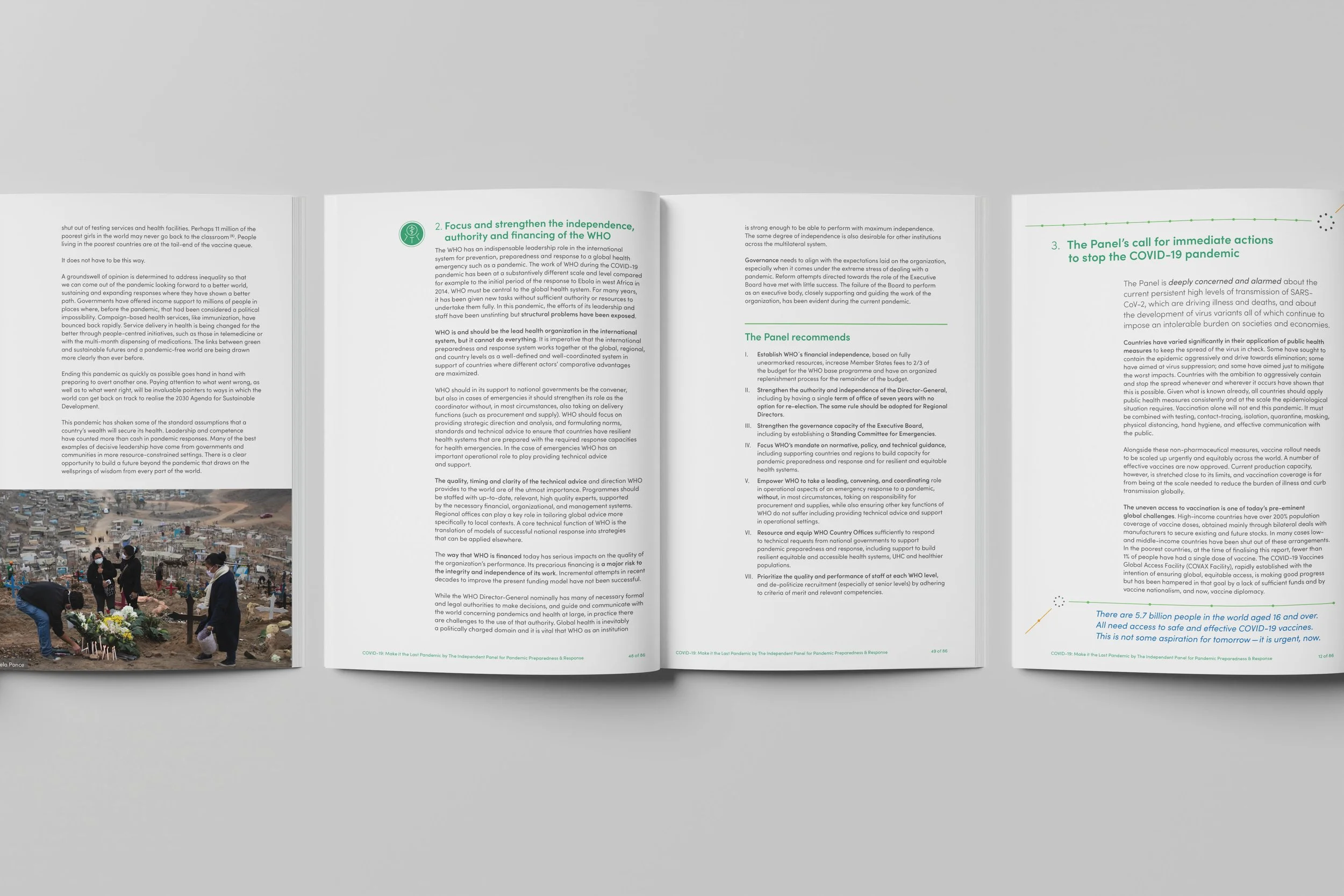
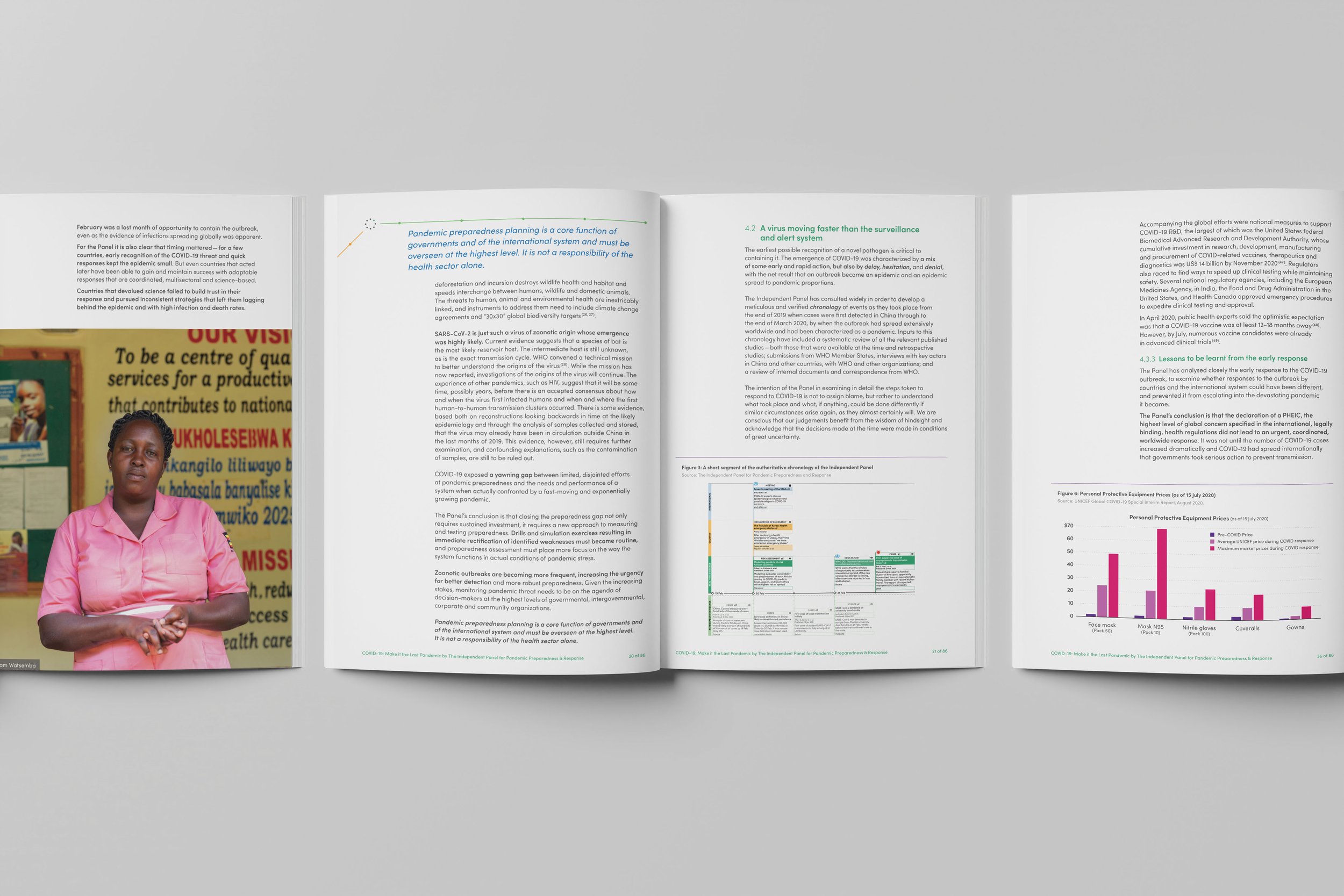
How an outbreak became a pandemic
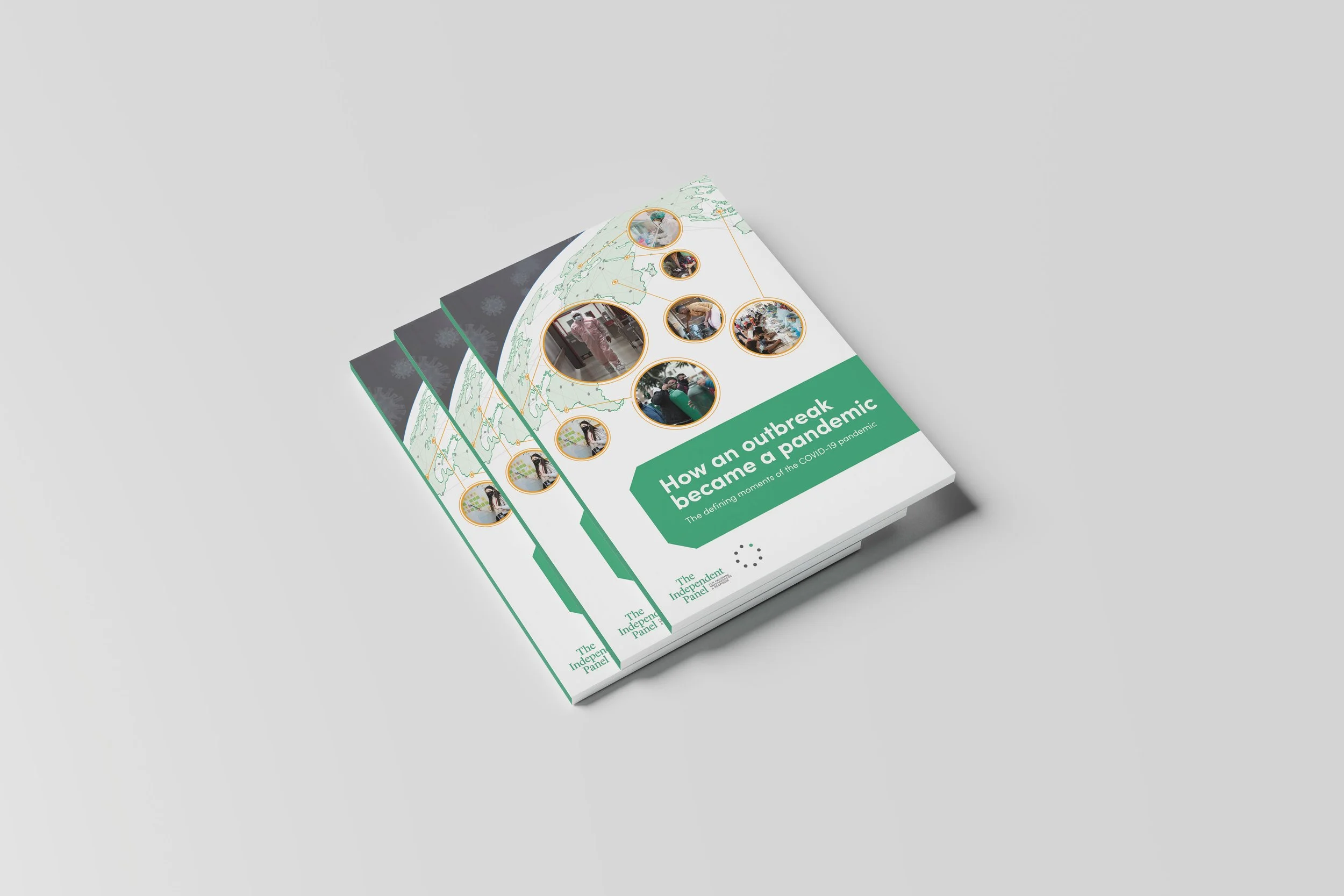
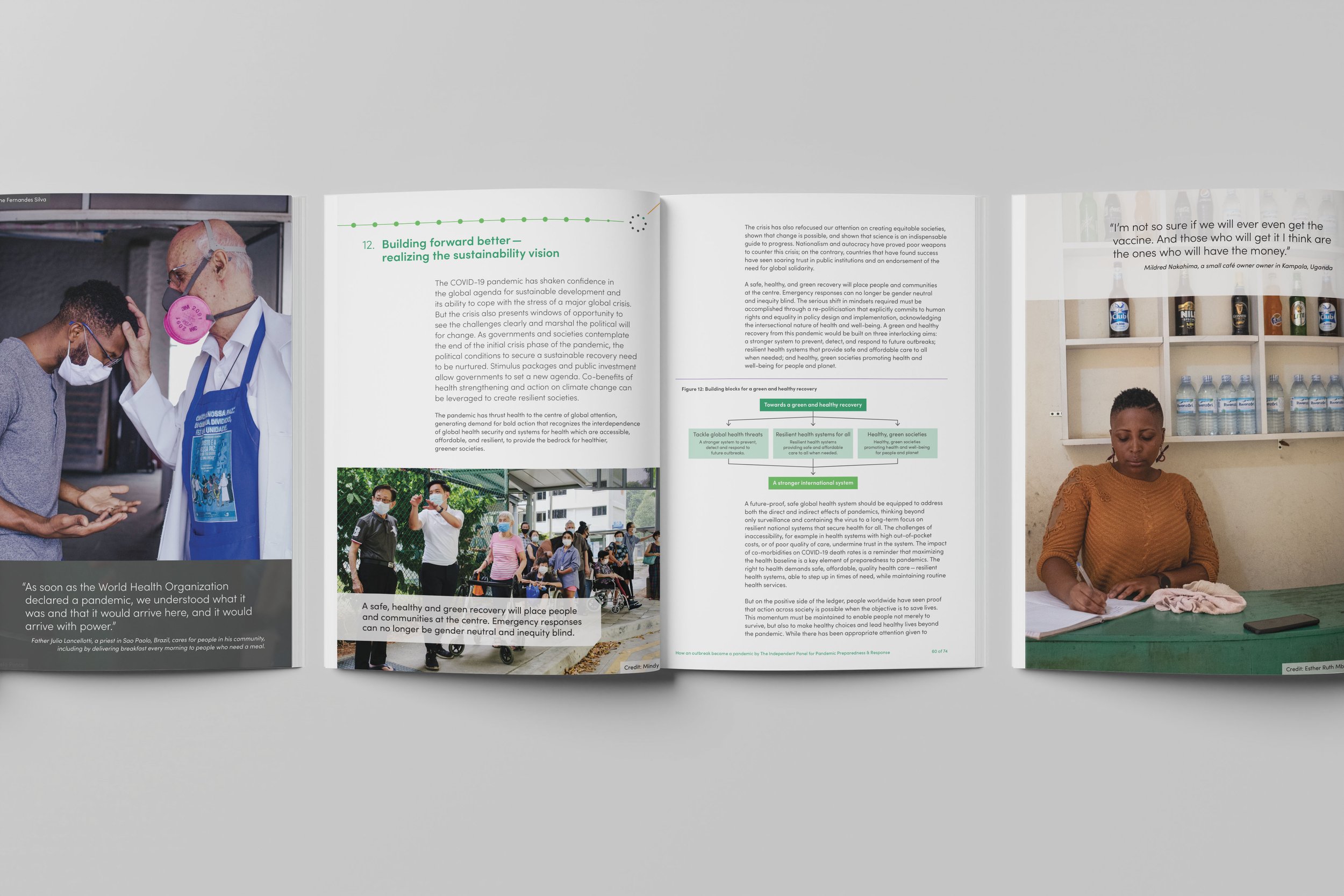
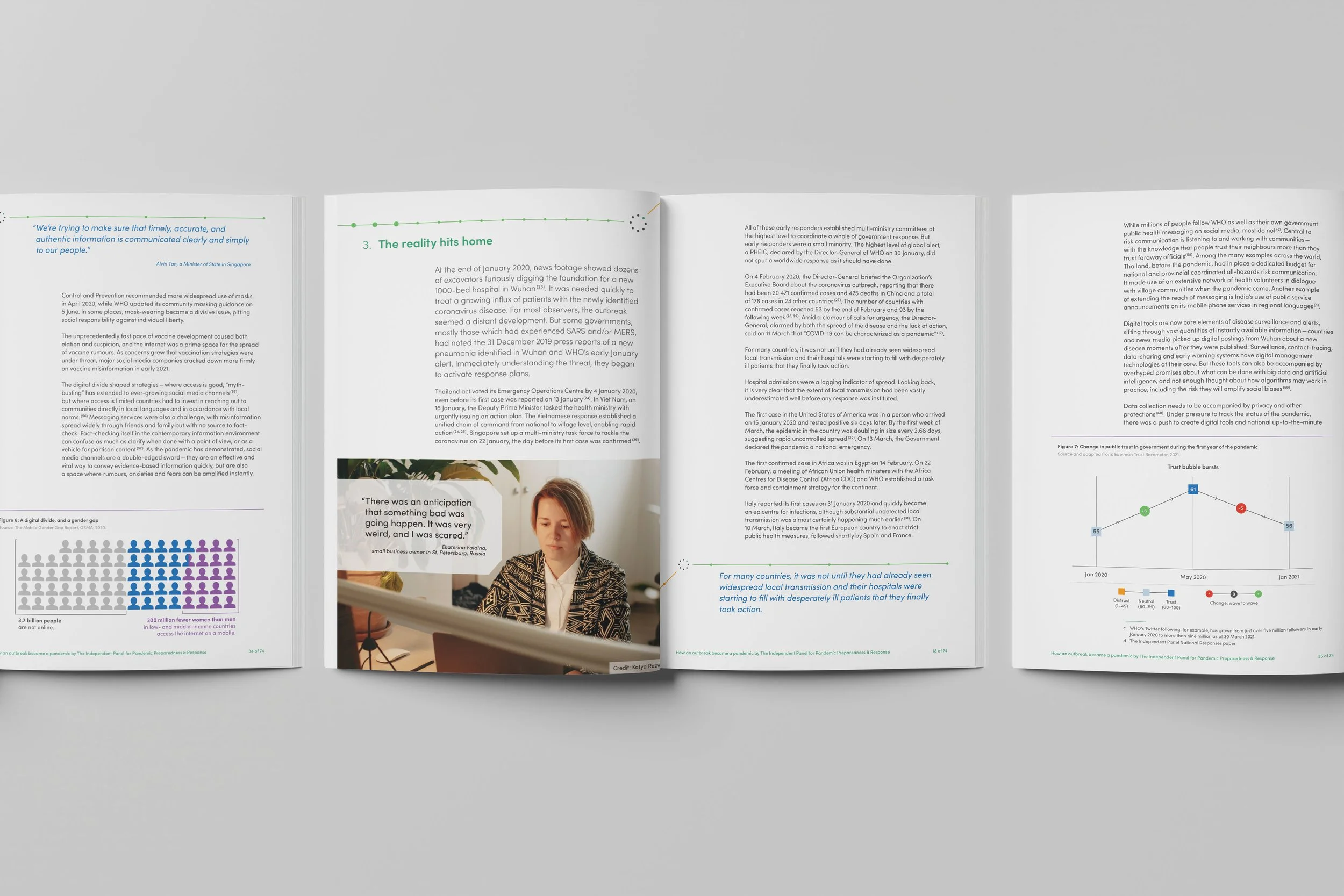
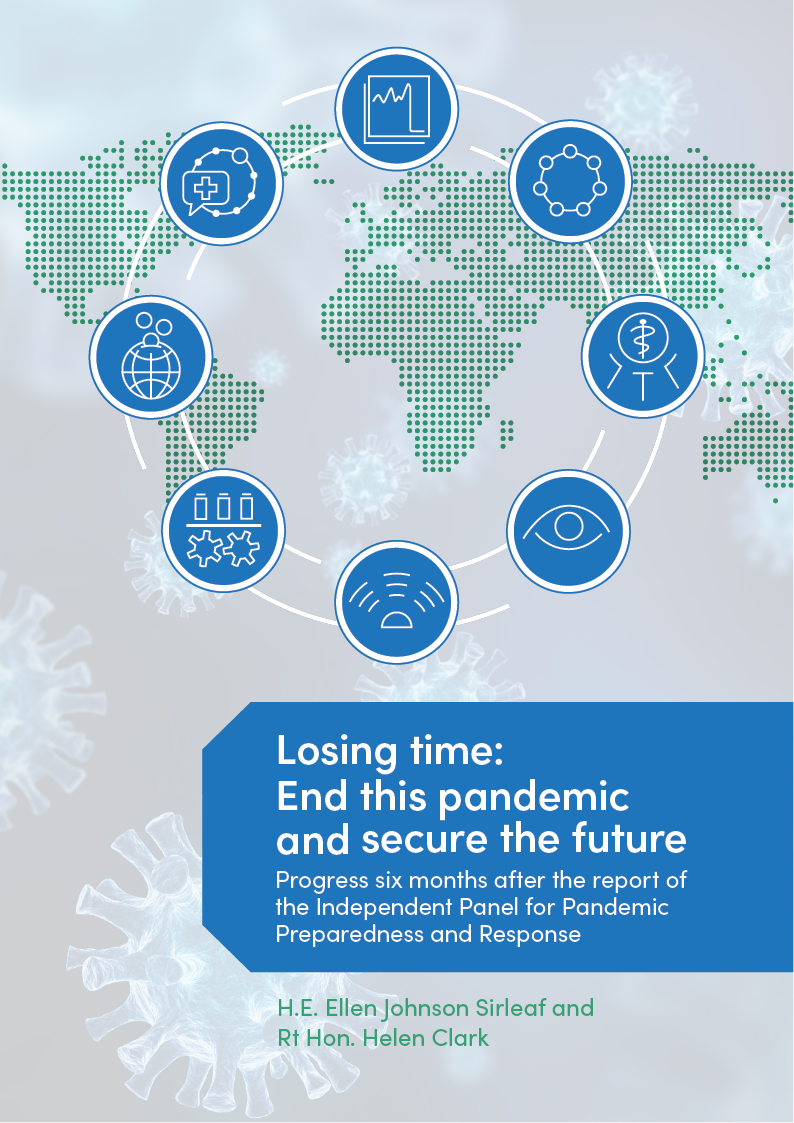
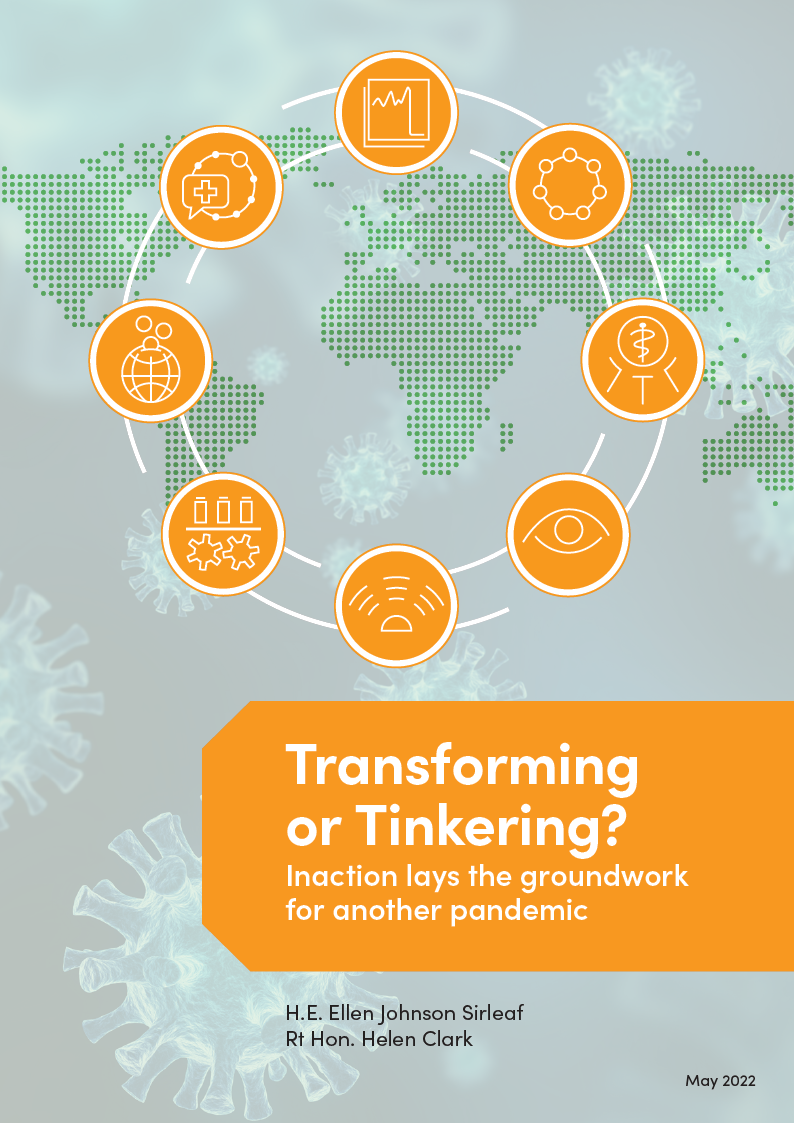
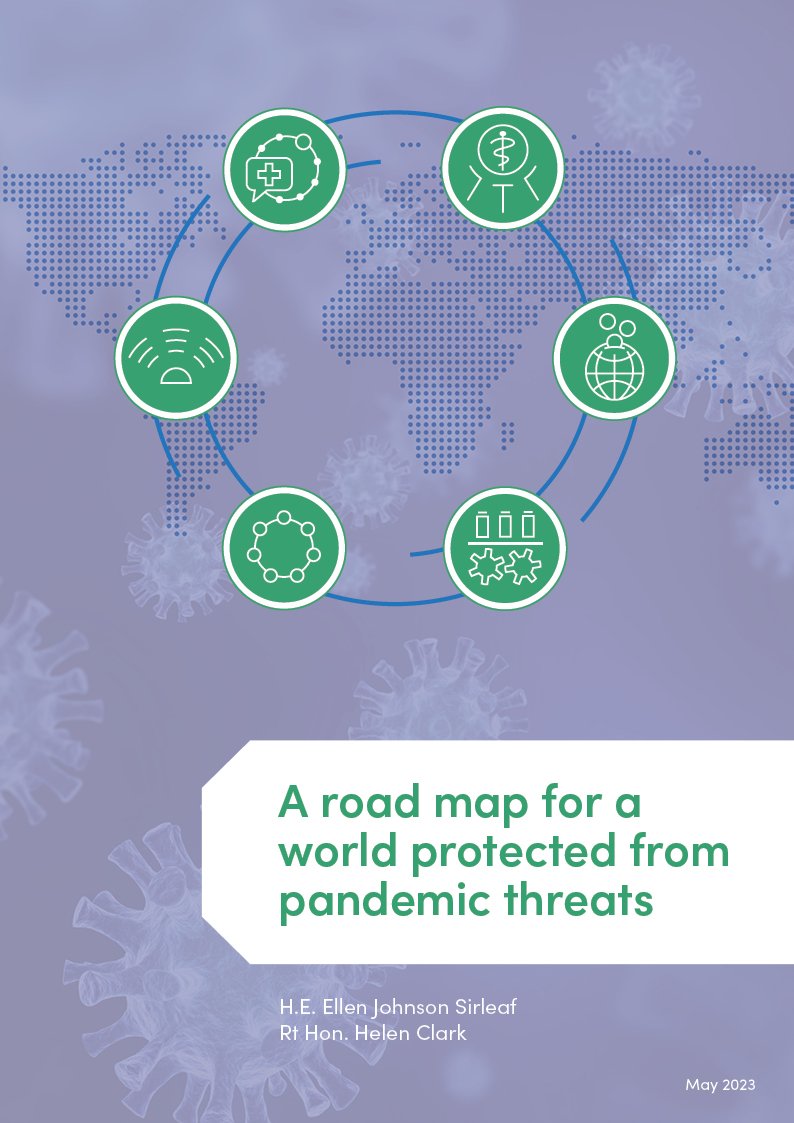
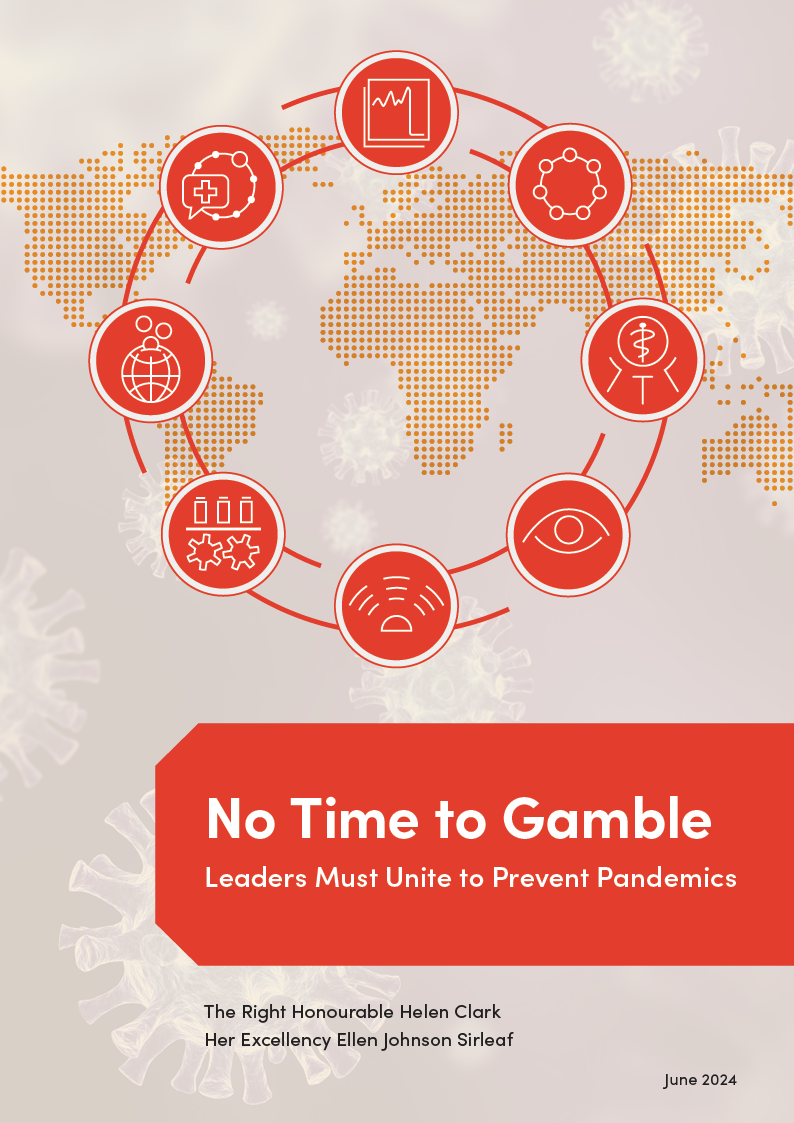
Report Series
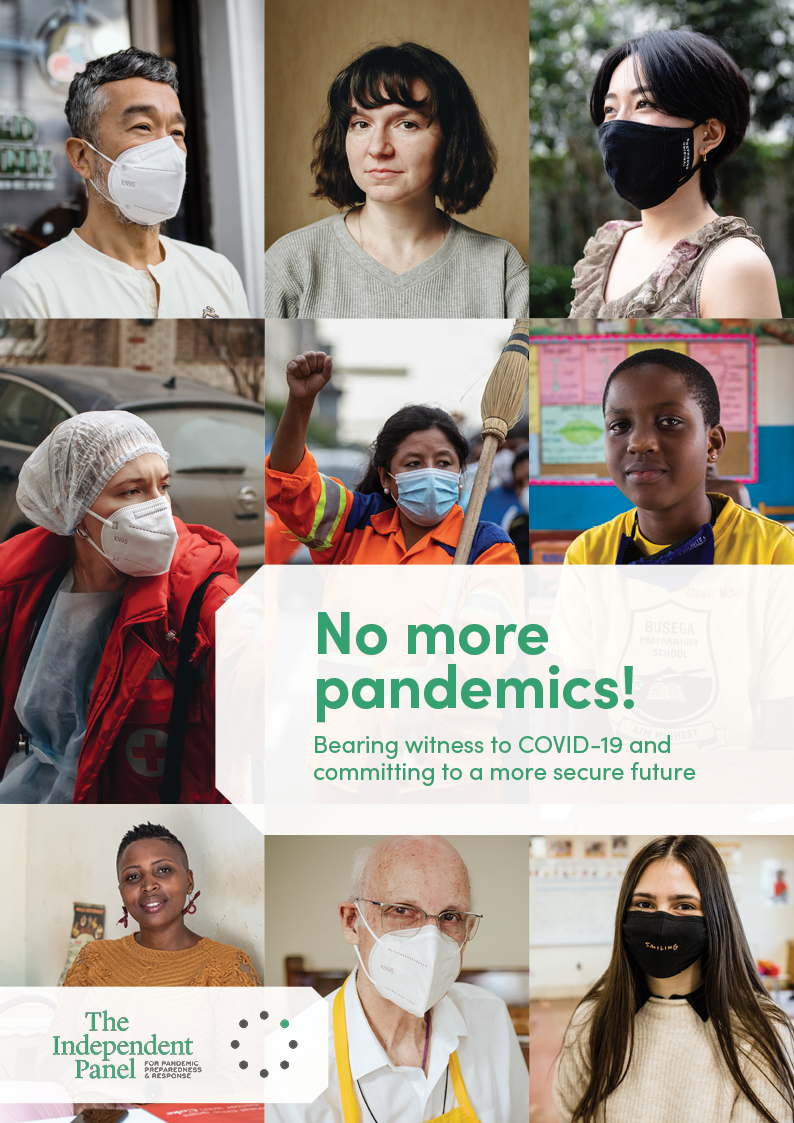
Our collaborative impact
In May 2025, the World Health Assembly adopted a historic Pandemic Agreement as a result of The Panel’s work from 2021 until today, which exposes the gaps of pandemic preparedness and response while also transforming global health architecture in preparation for future pandemic threats across the world.
We greatly value our continued relationship with The Panel and its impact on global public health.
“The Independent Panel for Pandemic Preparedness and Response continues its work today to realise a world where leaders collaborate and invest to prevent pandemics and protect all people, everywhere. Today the Co-Chairs are also publishing four new policy briefs that set out actions required to continue to make progress towards this goal. These include actions on finance, equitable access to medical countermeasures, independent monitoring and to secure wider political leadership.”
— The Independent Panel for Pandemic Preparedness and Response