
Identifying gaps in global datasets through interactive mapping
Client
Boston University’s School of Public Health
Services
Information and data design
Digital / Web
UX / UI
Deliverables
Content creation
Data organization
Data visualization
Information management
Information organization
Storytelling
UX / UI
Website design
Credits
Helios Design Labs, Developer
The project
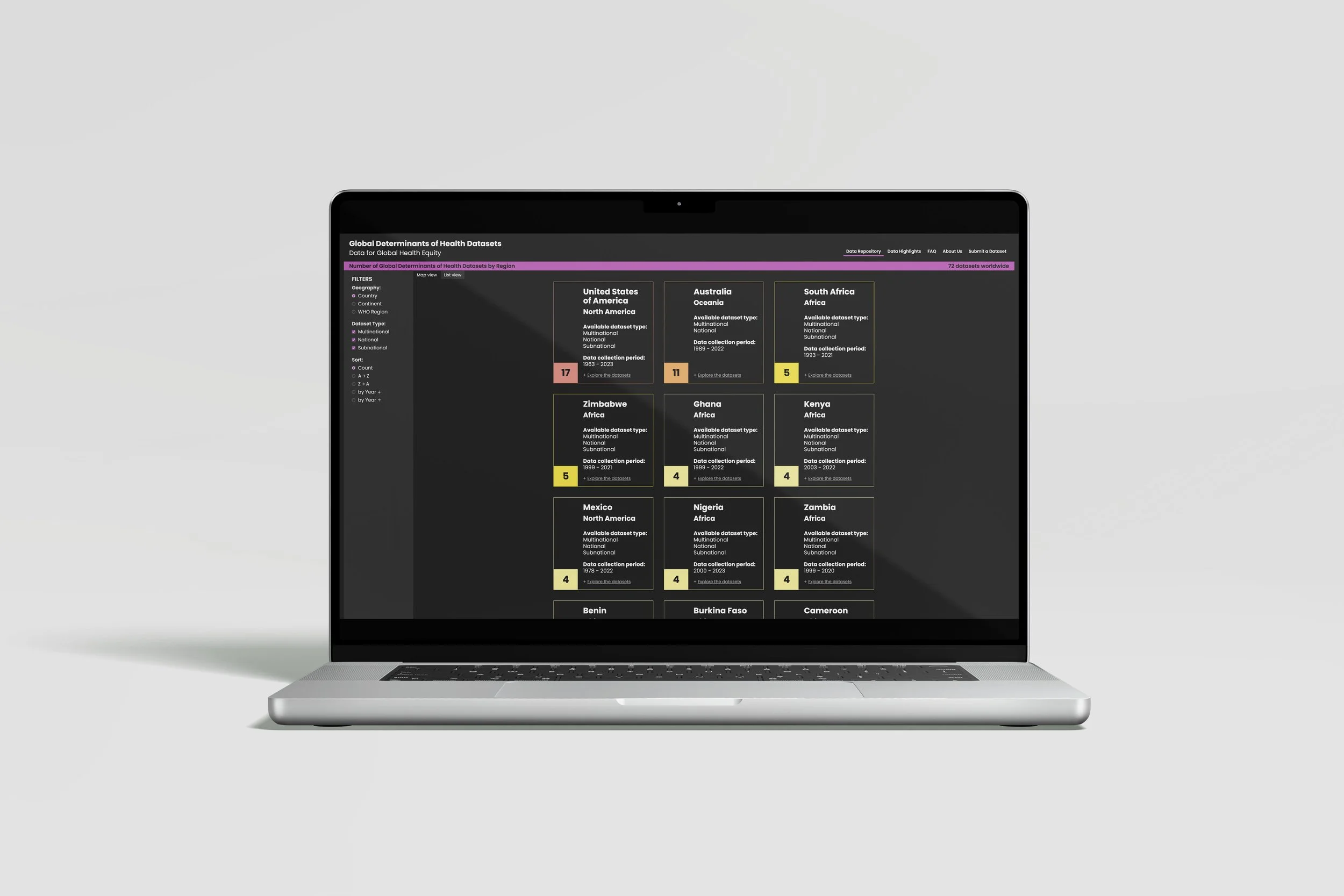
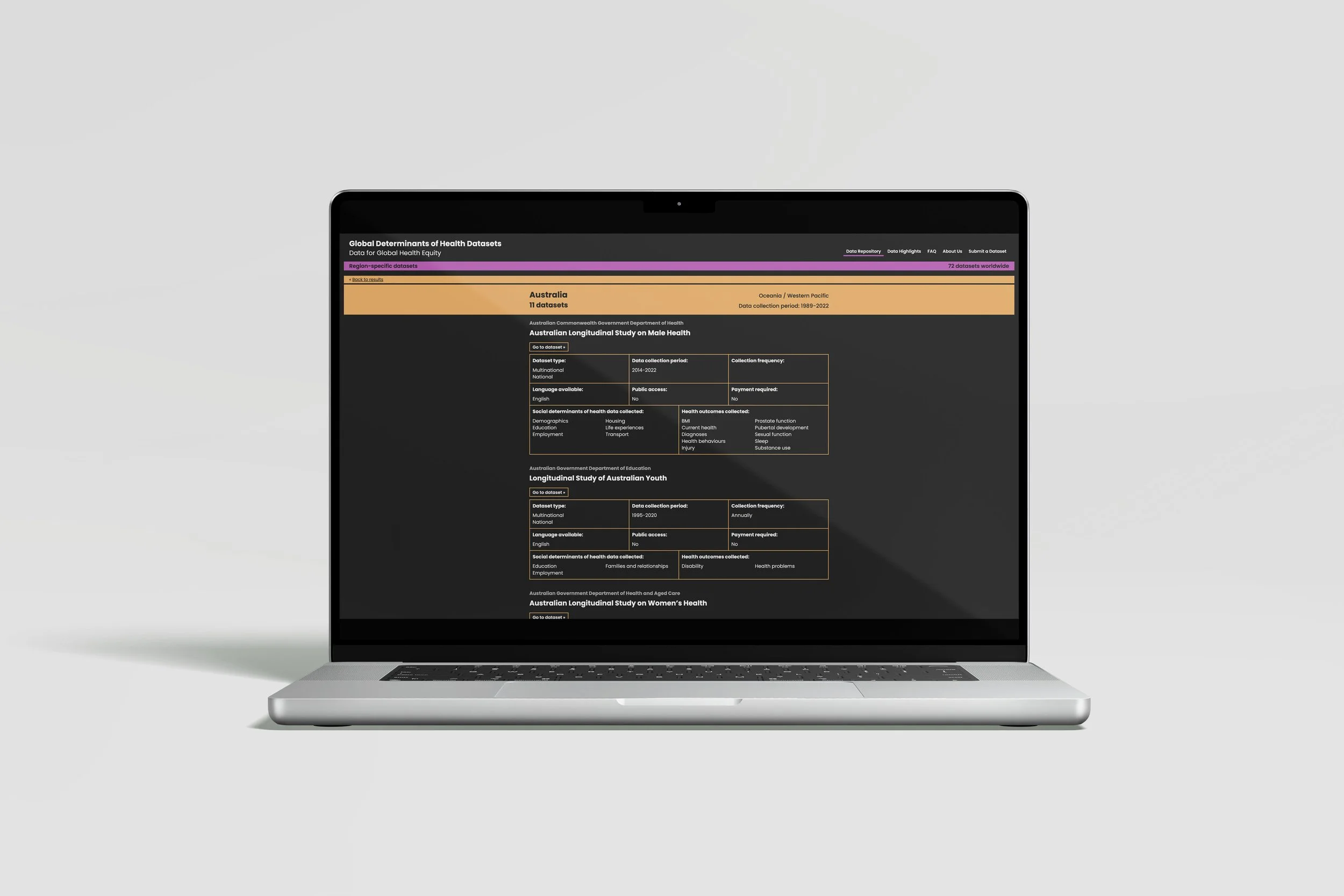
Dr. Salma Abdalla at Boston University envisioned creating an interactive repository to showcase the number of global determinants of health datasets and their geographic location. The primary goal of Dr. Abdalla’s research team was to aid research and inquiry by providing access to and exposing existing and continuing gaps across global determinants of health datasets. The repository had to be easy to navigate, low bandwidth compliant and mobile-friendly with a way to submit new datasets.
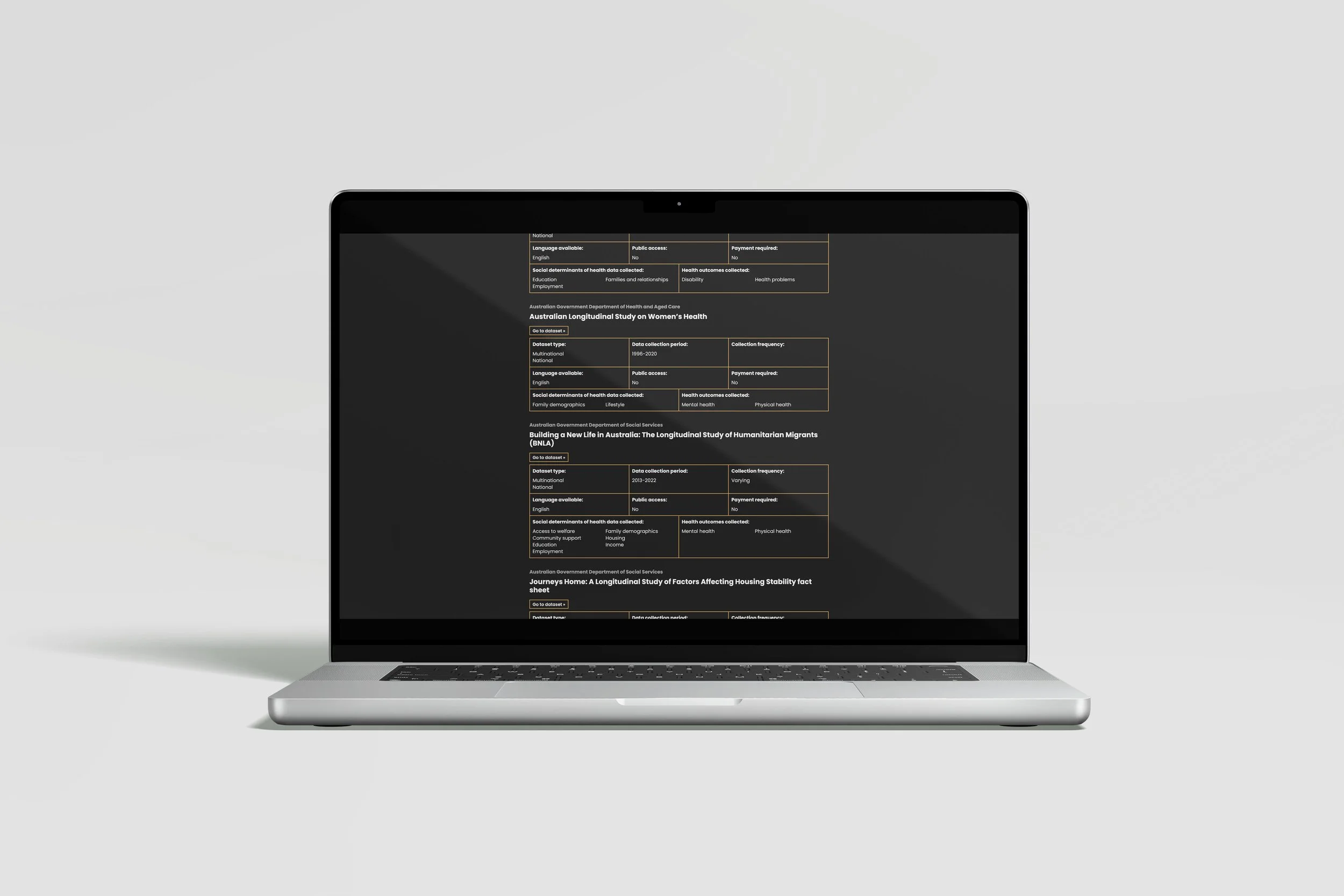
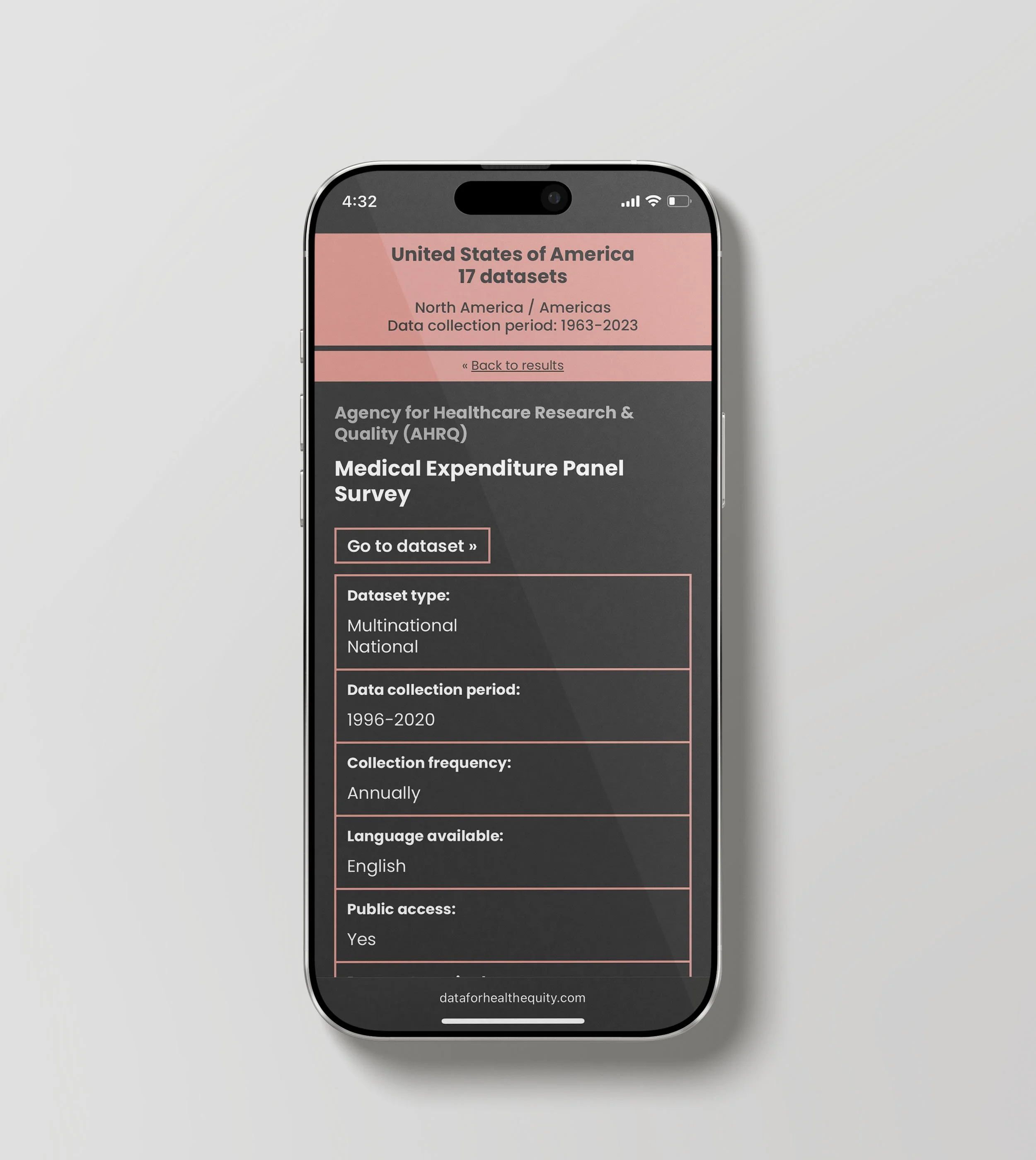
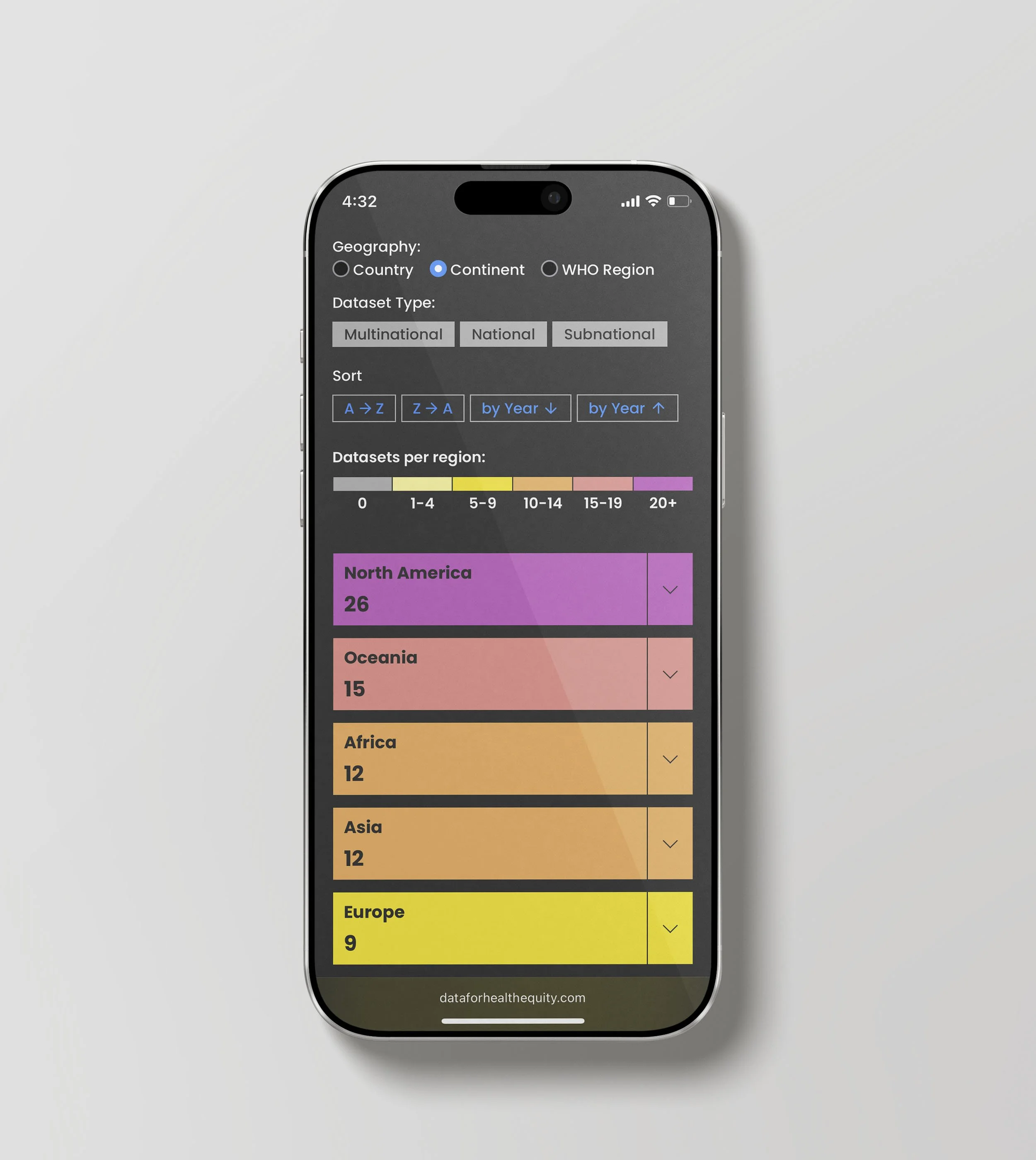
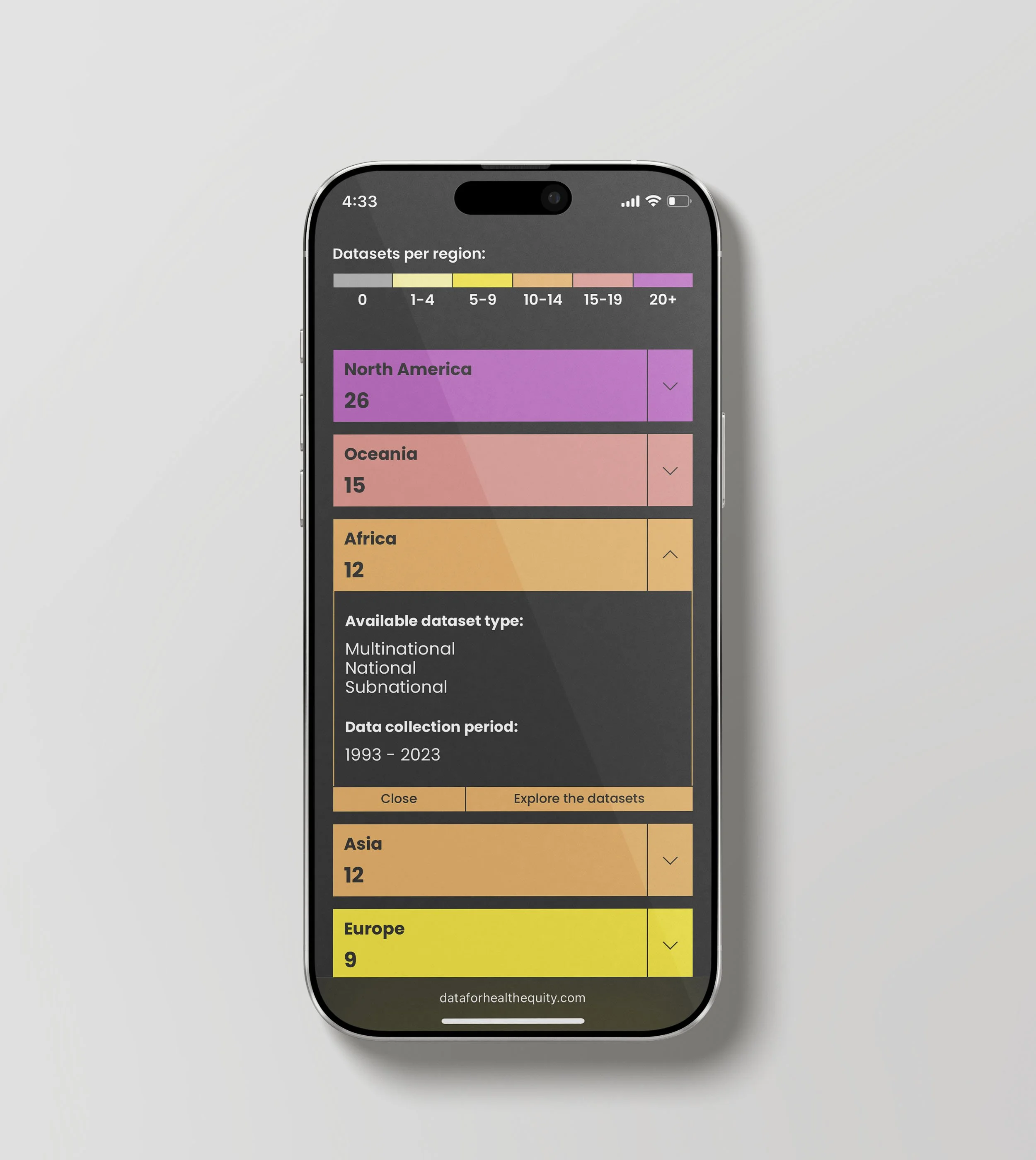
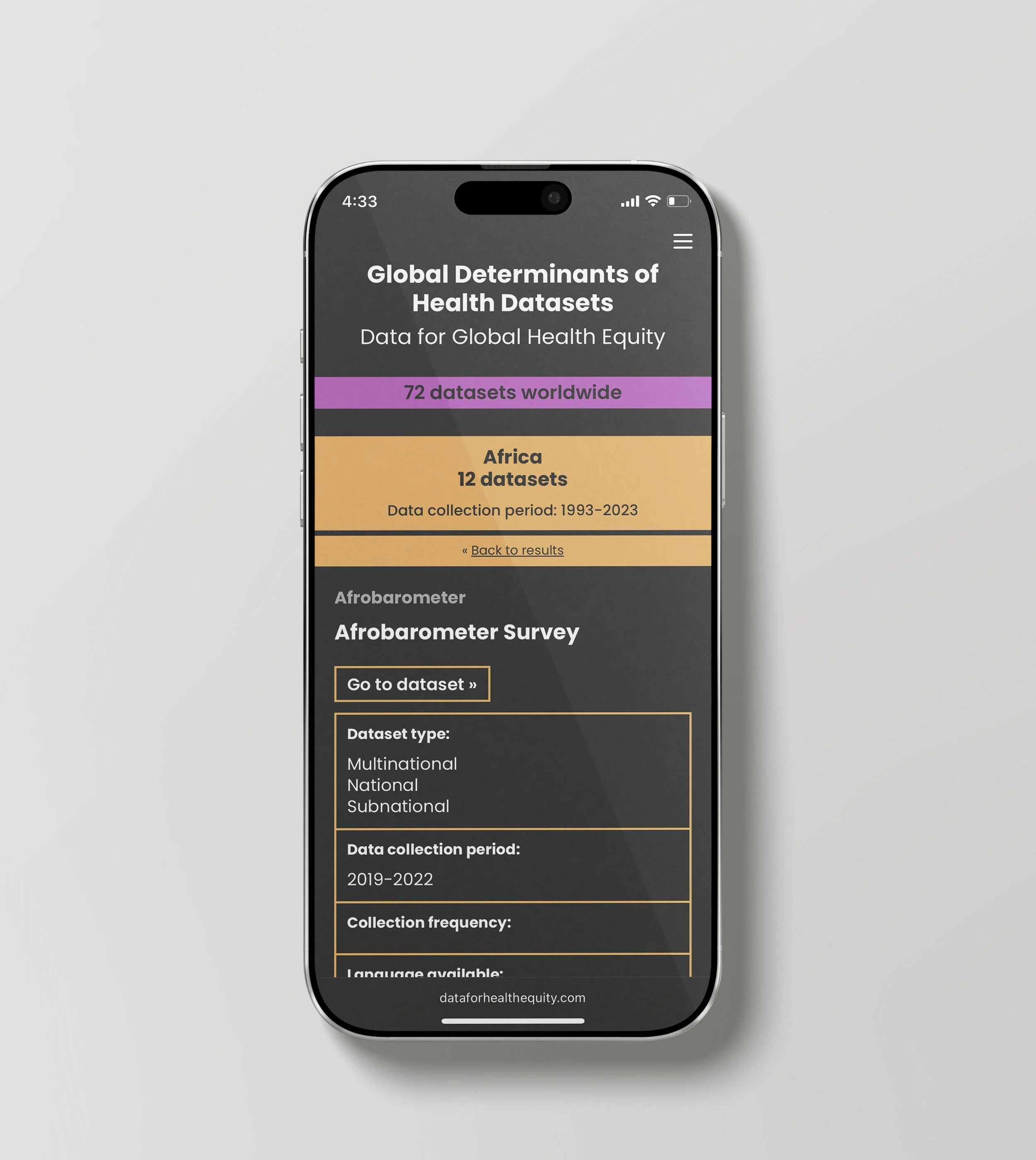
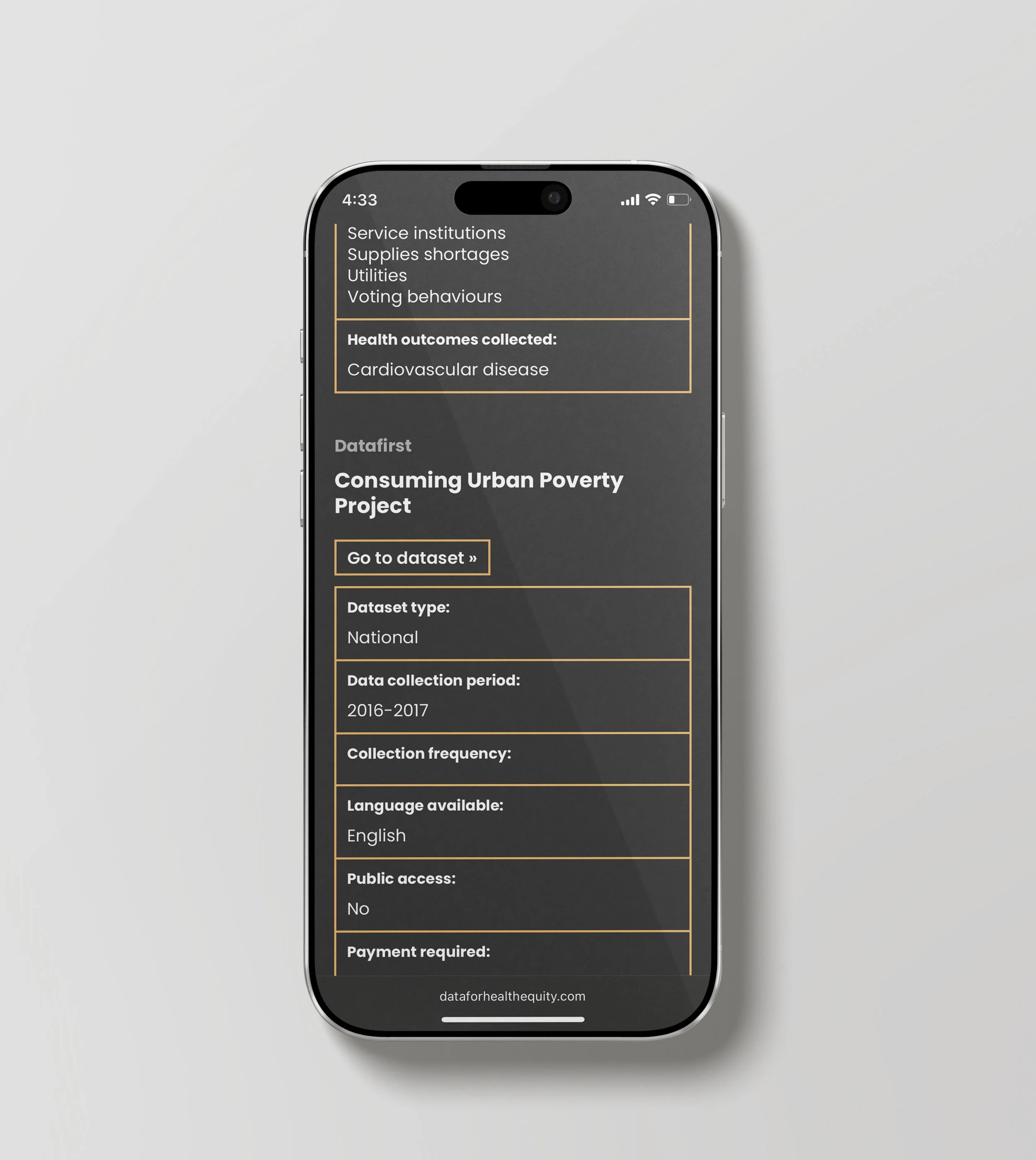
Michelle’s process involved developing a detailed spreadsheet to organize the datasets’ essential information and data collection. Her approach allows users to explore the datasets through geography, timeline, list, country, continent or WHO region. The mobile-friendly and low bandwidth version of the repository are modifications of its list view on desktop list.
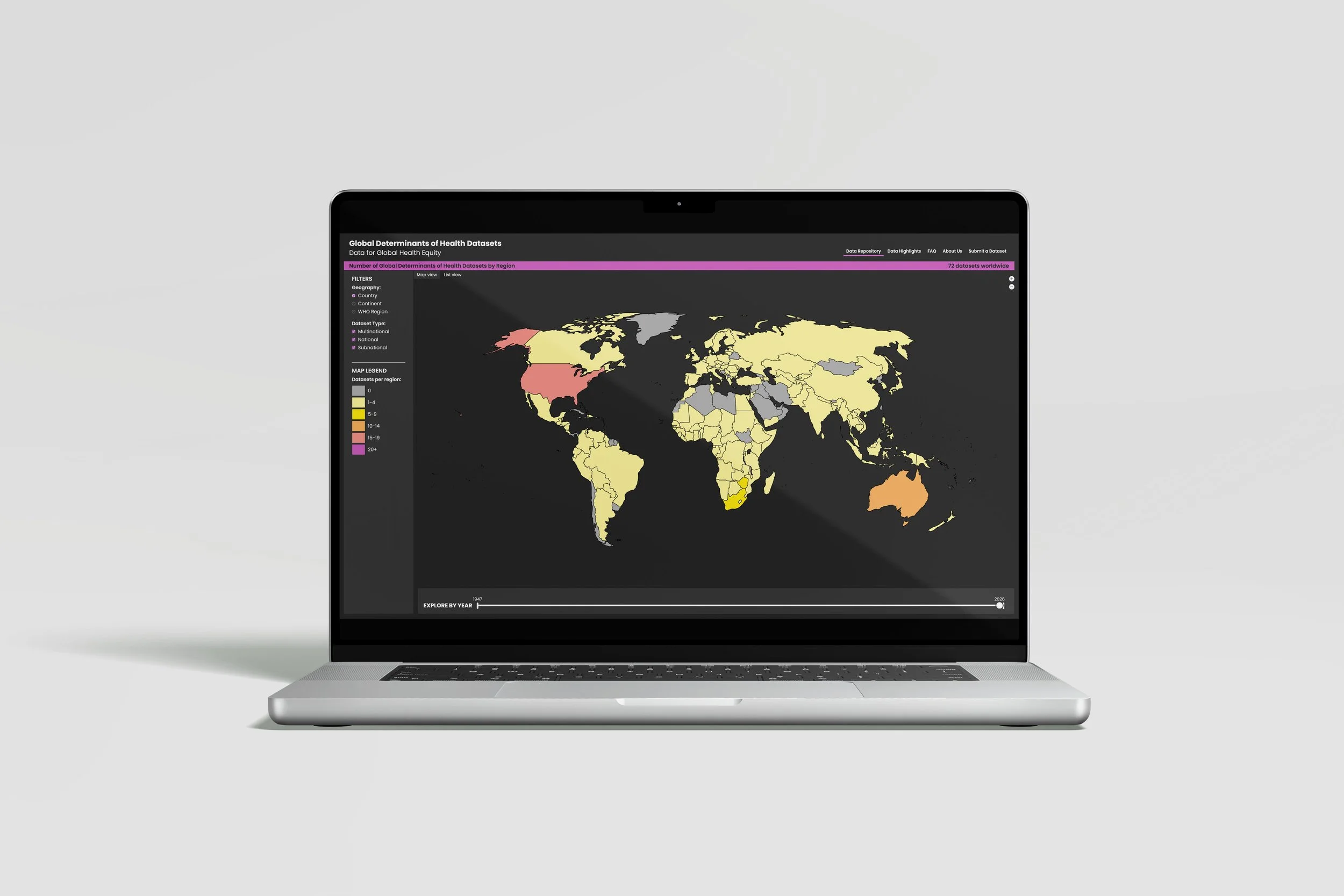
Data for Health Equity
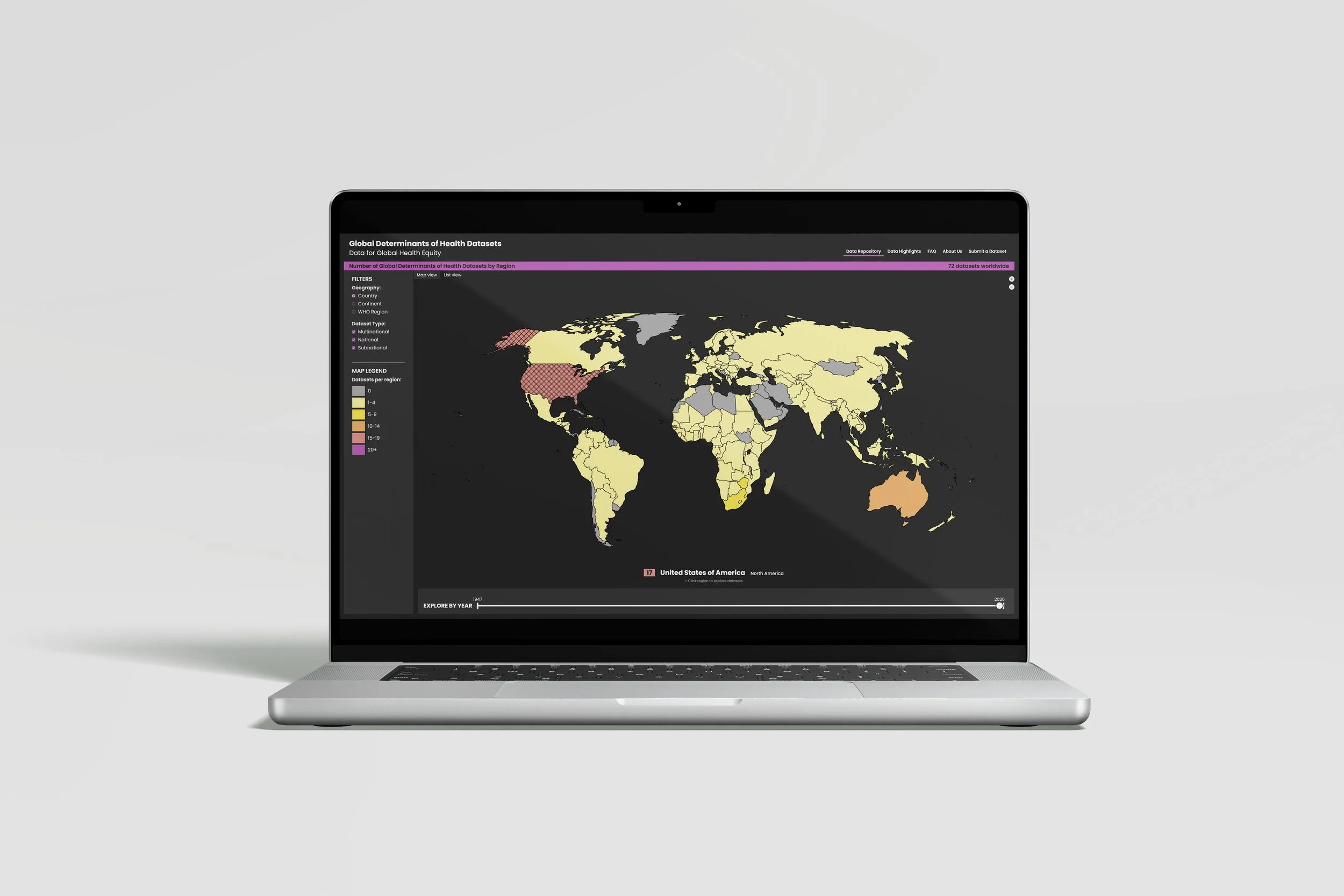
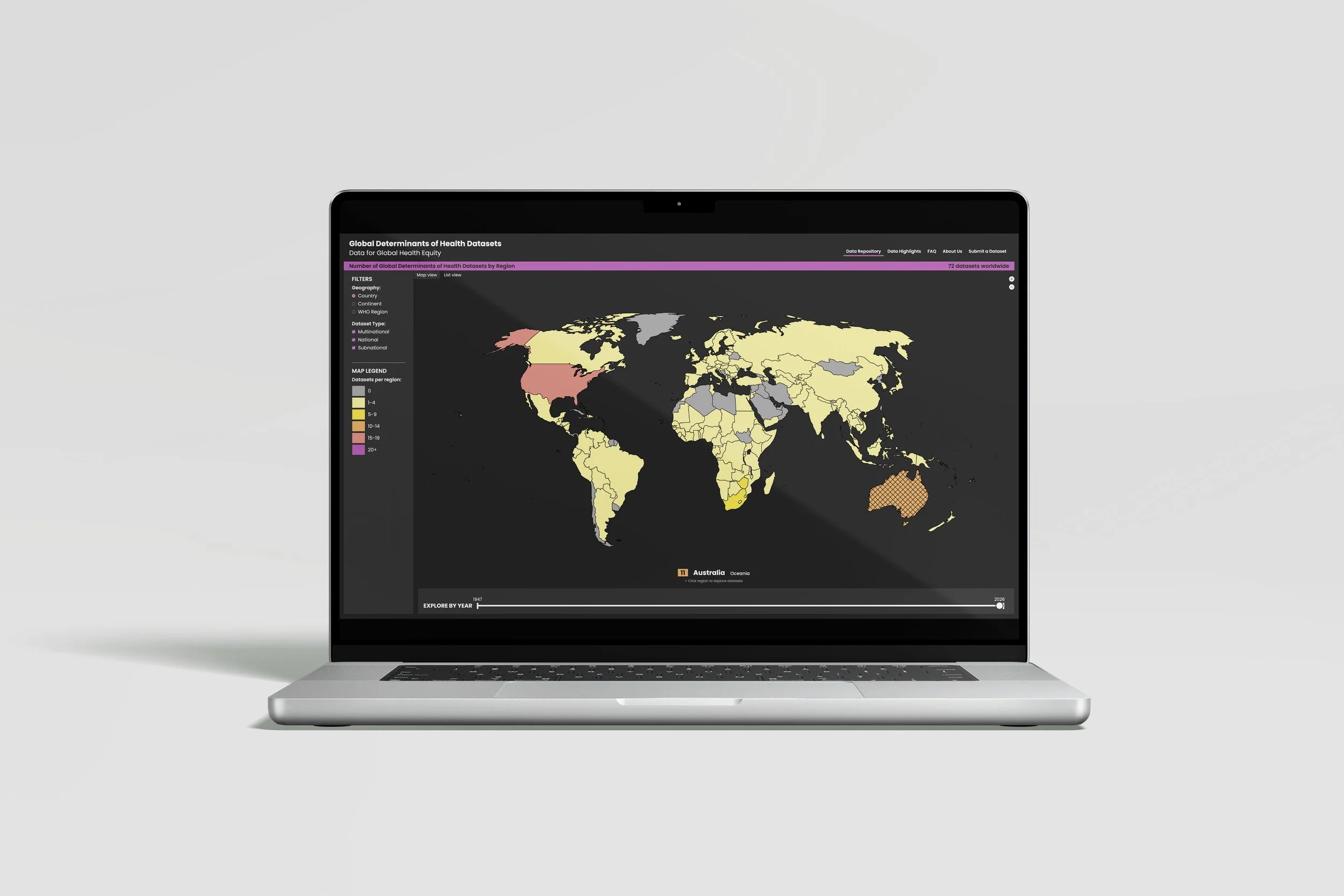
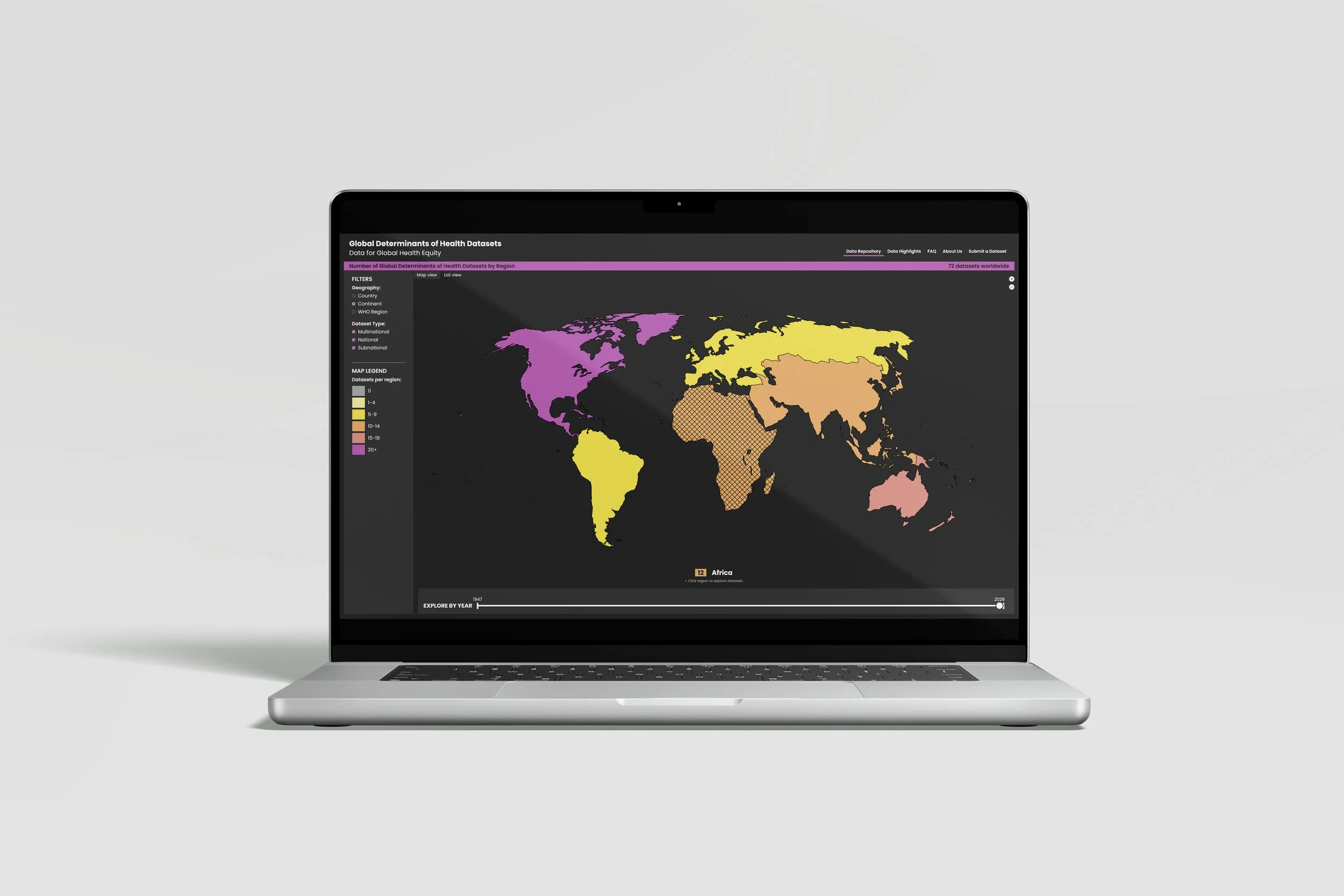
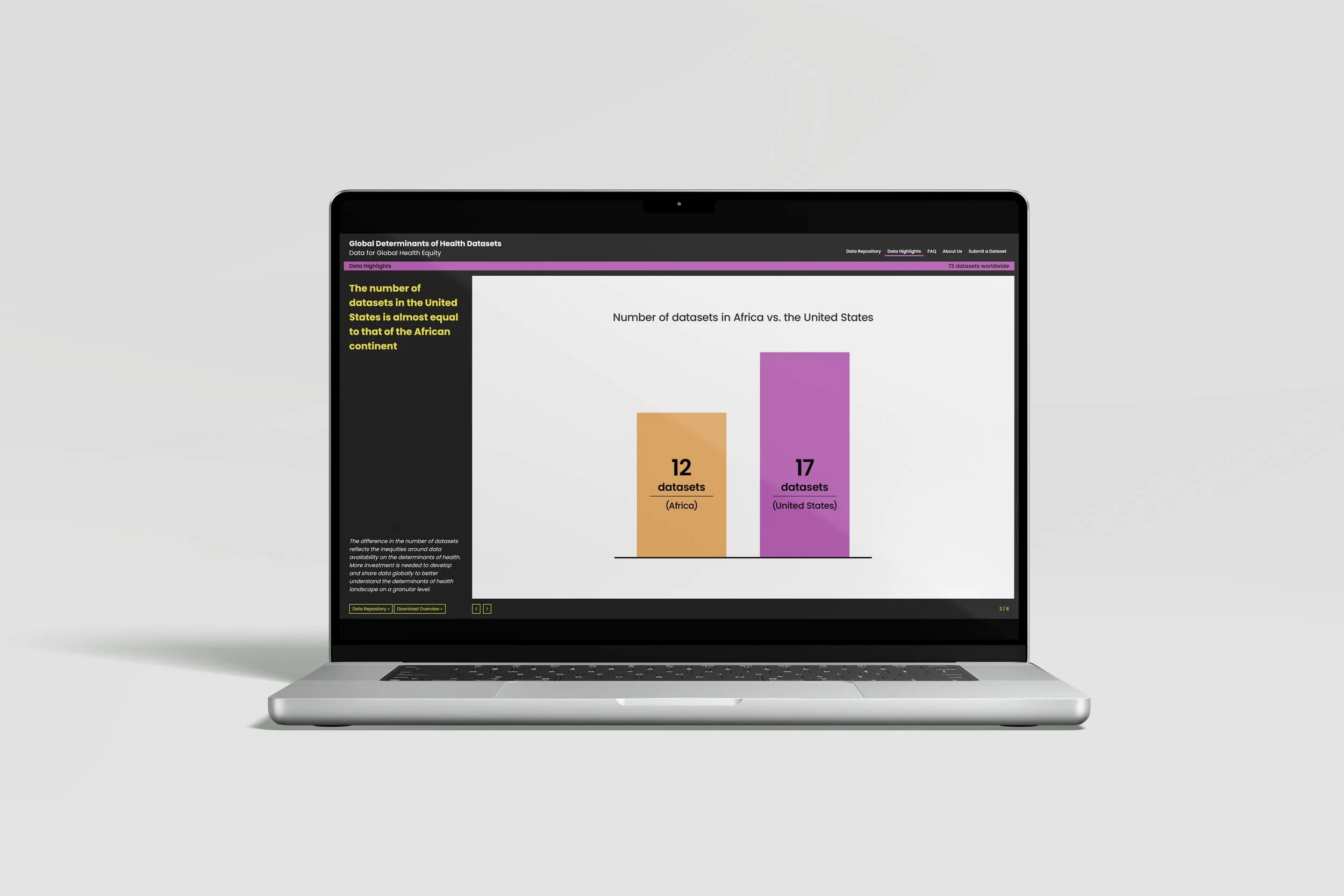
Mobile low-bandwidth website
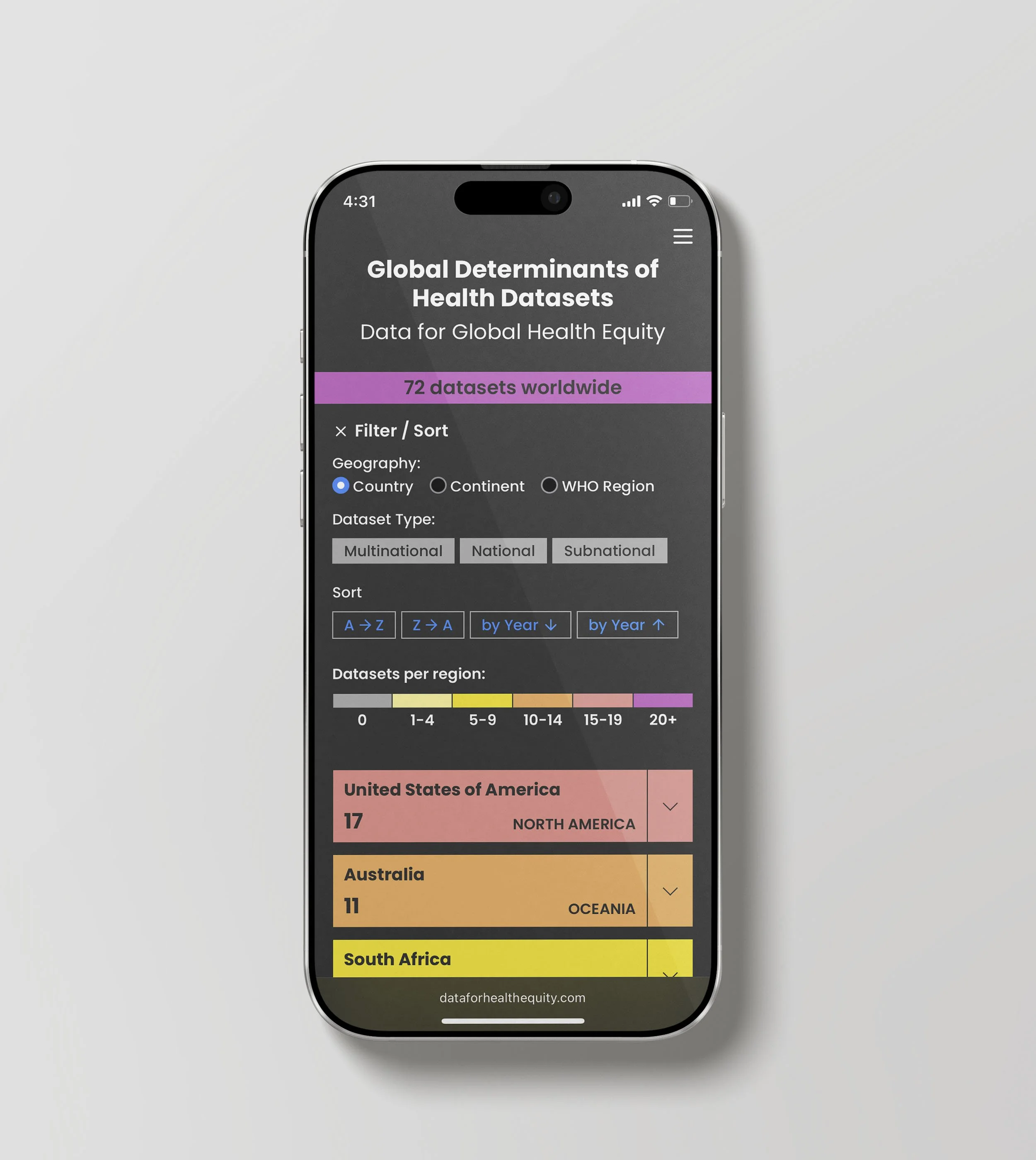
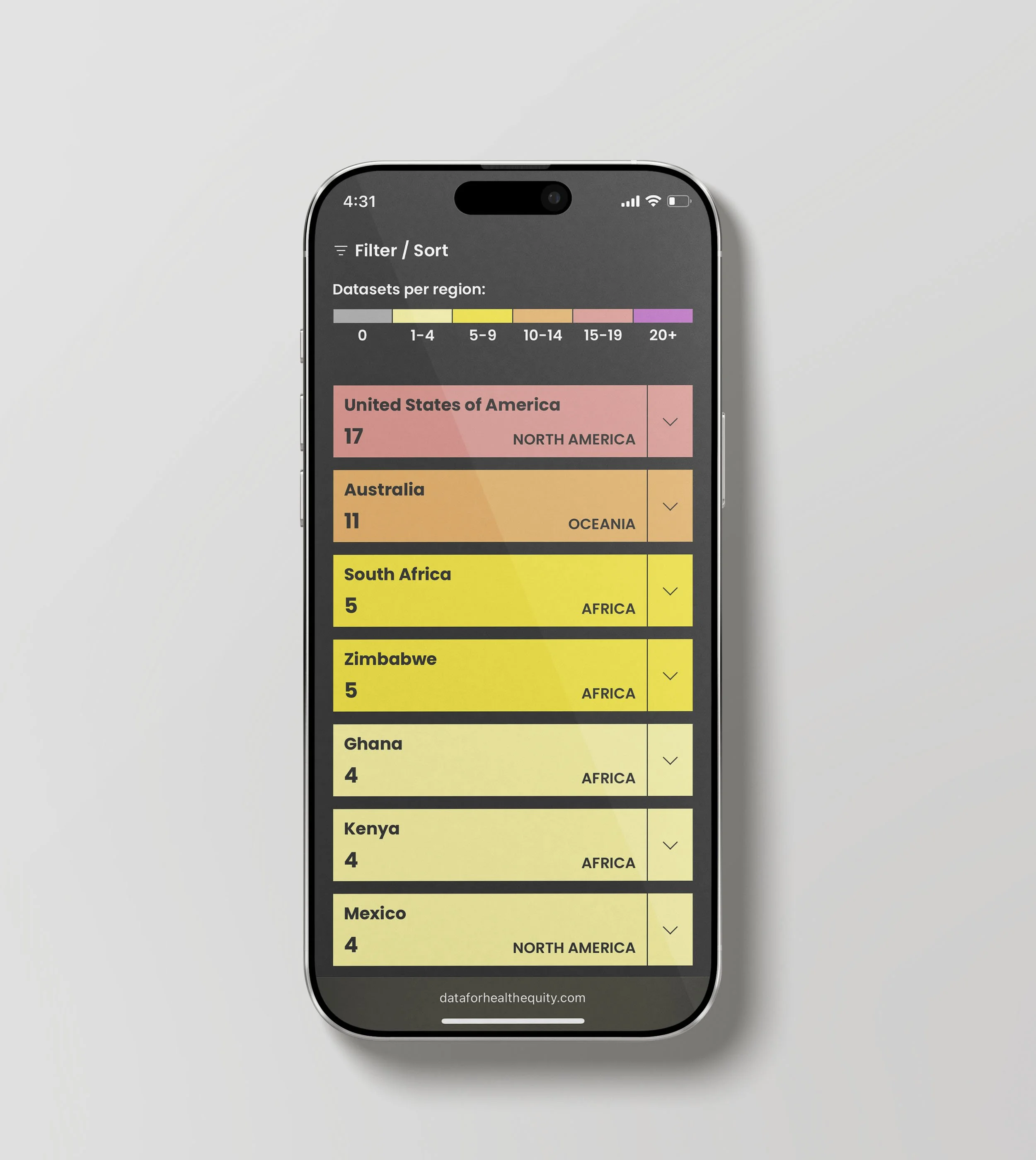
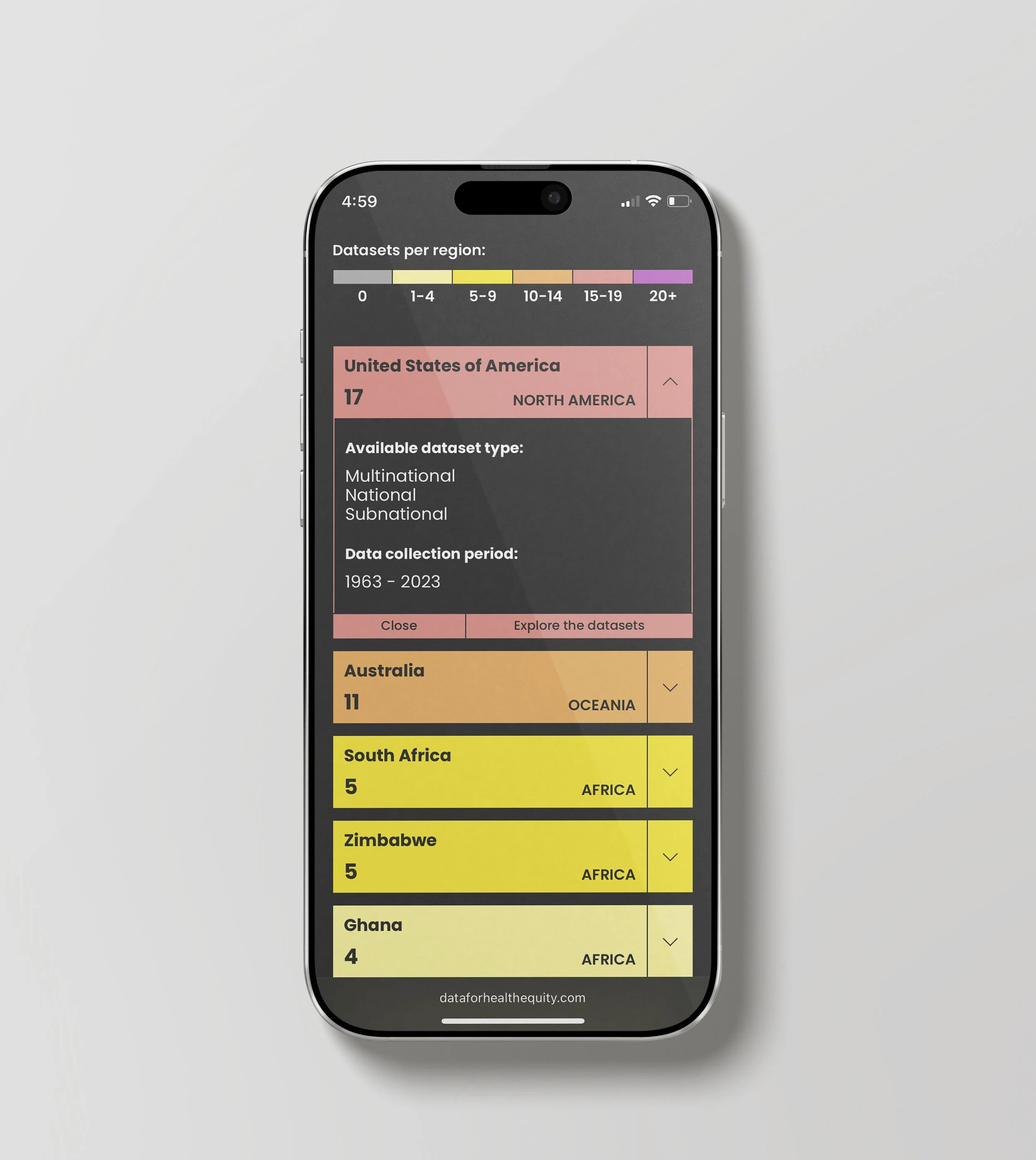
Our collaborative impact
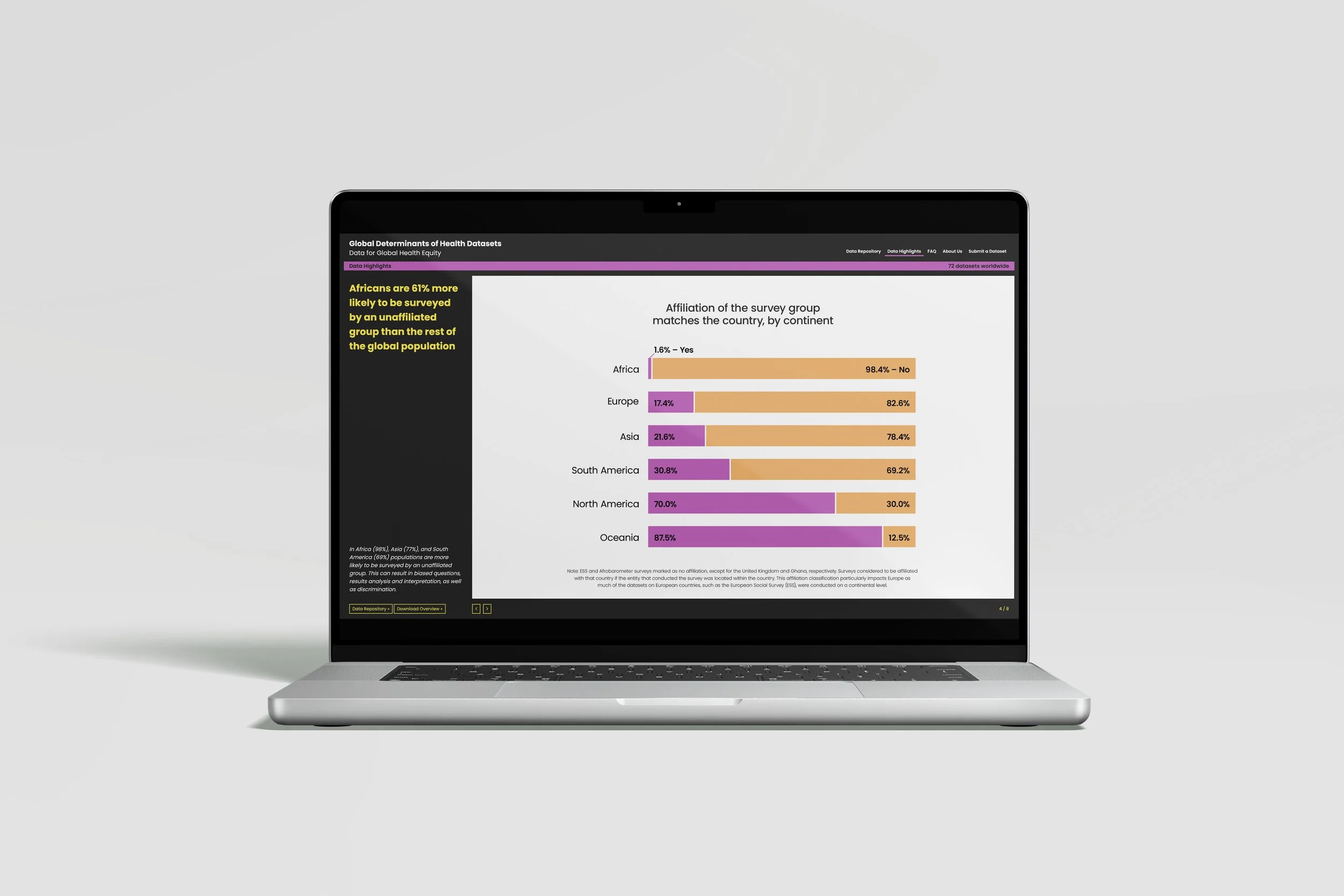
The interactive, visual, global mapping interface presented here brings to light important issues surrounding data collection and dissemination as it relates to underrepresented communities across the world.
DataforHealthEquity.com is a continuation of the essential work supported by the Rockefeller Foundation-Boston University 3-D Commission on Data, Determinants, and Decision-Making.